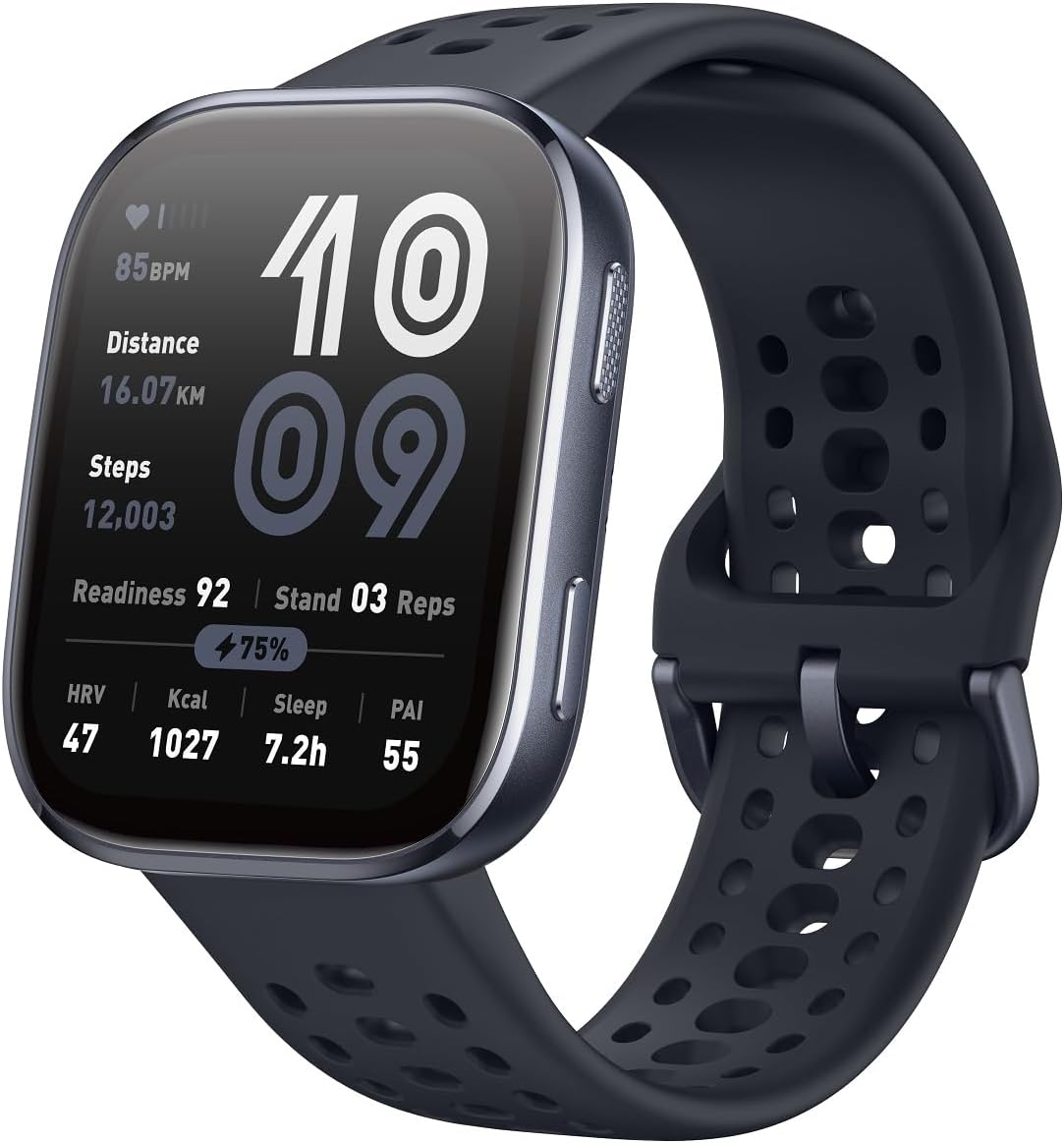
Amazfit Bip 6 Smart Watch
4.2Editor score
Large 1.97-inch AMOLED
140-plus workout modes
Up to 14-day battery
Multi-satellite GPS tracking
Free downloadable maps
A triathlon smartwatch must track more than steps and heart rate. It needs to handle running, cycling, swimming, and transitions while providing dependable navigation, useful recovery data, and enough battery life to support a demanding training week. The right model also needs to remain readable and comfortable through long sessions.
We compared these ten watches using their supplied specifications, focusing on multisport profiles, GPS capabilities, training metrics, navigation, smart features, displays, battery claims, and physical design. The list covers dedicated performance watches, rugged multisport models, health-focused alternatives, and lower-cost options for athletes building a kit gradually.
Each review explains the product's strongest benefits, practical limitations, and ideal athlete. The top selections prioritize different needs, including premium endurance performance, budget flexibility, and advanced multisport capability. Product listings, features, and prices can change, so confirm current specifications and availability before buying.
4.2Editor score

4.1Editor score

4.1Editor score
As an Amazon Associate we earn from qualifying purchases.
The table below compares all ten selections across their most decision-relevant features. It highlights the differences in display size, endurance battery, navigation, health monitoring, and multisport versatility so triathletes can quickly identify the watch that matches their training priorities.


The Garmin Forerunner 970 is positioned as a triathlon-focused running smartwatch, and its supplied feature list supports that intent. It earns a 4.1 rating and stands out for built-in maps, multiband GPS, extensive endurance battery claims, and a responsive touchscreen that works alongside traditional buttons. Those characteristics make it particularly relevant to athletes who regularly move between running, cycling, swimming, and unfamiliar routes.
We may earn a commission when you buy through this link, at no additional cost to you.
Navigation is a major strength. Full-color maps remove the need to rely entirely on a phone, while multiband GPS is designed to improve positioning in areas where satellite signals are weak, reflected, or obstructed. The watch also provides training readiness, daily suggested workouts, course details, and race-related information, giving the athlete a useful planning tool rather than simply recording each session.
Battery endurance is particularly persuasive for long-course preparation. The stated maximum is 15 days in smartwatch mode, 42 hours in GPS mode, and as much as 80 hours in UltraTrac mode. Traditional buttons remain available for wet or high-intensity conditions, while the touchscreen makes menus and maps quicker to explore. The resolution of 480 by 272 is less impressive than some premium AMOLED screens, and the earbud bundle is not useful to every buyer.
This is a strong recommendation for a serious triathlete who values navigation, training structure, and endurance battery life over premium materials or the newest display technology. It may be especially attractive for athletes who want a capable race-day watch and everyday wearable in one package. Review the included accessories and confirm your preferred sports profiles before making the final purchase.
Built-in full-color maps and multiband GPS support are particularly valuable when training somewhere new, traveling with a bike, or running routes with limited cellular reception. The watch is designed to provide clearer course context without requiring repeated phone interaction.
The stated 42-hour GPS maximum and 80-hour UltraTrac maximum leave room for long rides, extended travel, and multi-session weekends. Smartwatch-mode endurance also reduces the need to charge daily between training sessions.
We may earn a commission when you buy through this link, at no additional cost to you.
This Soft Gold Forerunner 970 bundle combines a 1.4-inch AMOLED display with multi-band GPS, SatIQ technology, and advanced training tools. Its 4.6 rating reflects a strong overall proposition, while the titanium bezel, sapphire lens, and built-in flashlight give it a more refined and durable feel than many conventional running watches.
We may earn a commission when you buy through this link, at no additional cost to you.
The training features go beyond basic activity recording. Running economy, endurance score, training readiness, recovery time, adaptive coaching, and workout suggestions help athletes balance workload and recovery. Built-in full-color maps, turn-by-turn directions, and multiband positioning make it useful for both road sessions and off-grid routes where confident navigation matters.
The 26-hour GPS battery is more modest than the 42-hour maximum listed for the first bundle, but it remains appropriate for typical multisport training and a race day. Its AMOLED screen is bright and responsive, while phone calls, smart notifications, and safety tracking broaden its utility beyond sport. The titanium, sapphire, and French Gray color combination also has a premium appearance, though the P-Bank and other included accessories may not interest every buyer.
Choose this version if you prioritize modern display quality, detailed readiness guidance, and premium materials. It suits competitive runners and triathletes who want a watch that can support training analysis, navigation, and daily organization. Those prioritizing maximum GPS endurance or a simpler package should compare the other Forerunner 970 bundle before checkout.
Readiness, recovery estimates, and suggested workouts turn the watch into a planning tool. Instead of training every day in isolation, an athlete can use the data to balance intensity and rest as the race block develops.
The titanium bezel and sapphire lens contribute to a more refined design, while calls, notifications, and safety features make the watch useful between workouts. Its AMOLED display also provides a clear upgrade for map and data review.
We may earn a commission when you buy through this link, at no additional cost to you.
The Garmin Instinct 3 AMOLED is a rugged 45mm GPS smartwatch built for athletes who train hard and often encounter demanding outdoor conditions. It has a 4.6 rating, a vivid 1.2-inch AMOLED display, and an 18-day battery claim. A supertough fiber-reinforced polymer case and metal-reinforced bezel form the foundation of its tough design.
We may earn a commission when you buy through this link, at no additional cost to you.
Navigation features include a three-axis compass, barometric altimeter, and multi-band GPS with SatIQ. The positioning system is intended to provide better accuracy while also managing battery use. A built-in LED flashlight offers variable intensity and strobe modes, an uncommon convenience for early starts, unlit trails, and nighttime rides.
Health monitoring covers wrist-based heart rate, advanced sleep tracking, and Pulse Ox, though the supplied information notes that these readings are close estimates and not medical-device outputs. The watch prioritizes toughness, battery life, and dependable outdoor orientation rather than a large touchscreen or extensive maps. It will appeal to triathletes who are less concerned with premium materials and more concerned with a watch that can tolerate hard use.
This is a compelling option for rugged, high-volume athletes who need a reliable watch for daily training, trail running, and long-distance cycling. Those wanting detailed course navigation, a slimmer profile, or a more luxurious finish should favor a Forerunner or fēnix instead. For durability and endurance-focused value, the Instinct 3 is difficult to overlook.
The reinforced case and bezel are designed for demanding use, while the 18-day smartwatch battery reduces charging interruptions during a busy training block. Its relatively robust form may also feel more practical than a delicate fitness watch.
Multi-band GPS with SatIQ, a compass, and an altimeter support dependable orientation, while the flashlight adds useful visibility when a headlamp is impractical. Together, these features suit athletes training before sunrise or in remote areas.
We may earn a commission when you buy through this link, at no additional cost to you.
The Garmin Forerunner 165 is a lightweight 43mm running smartwatch that combines an AMOLED touchscreen with traditional buttons. It carries a 4.6 rating and includes built-in GPS, wrist-based heart rate, personalized daily workouts, Garmin Coach, and race-adaptive training plans. It is a practical choice for triathletes who want a focused training watch without a large case.
We may earn a commission when you buy through this link, at no additional cost to you.
Its 25-plus activity profiles include running, cycling, HIIT, and strength, allowing the watch to cover much of a triathlon training week. The morning report brings together sleep, recovery, training outlook, weather, and HRV status. Training effect labels, recovery time, incident detection, Assistance, and smart notifications make it a well-rounded training partner.
Battery life reaches up to 11 days in smartwatch mode and 19 hours in GPS mode, enough for normal multisport use when managed thoughtfully. The main compromise is navigation: built-in GPS and familiar route tools are useful, but the supplied feature list does not mention full onboard maps. The watch also lacks the overtly rugged construction of the Instinct line.
The Forerunner 165 is best for athletes who want an approachable, lightweight watch and structured preparation for a specific run or race. It also works for triathletes who run most often and use cycling and strength profiles for supplementary tracking. If off-grid mapping is a central requirement, choose one of the Forerunner 970 options instead.
Race-adaptive plans and daily suggested workouts help turn broad goals into scheduled sessions. The Garmin Coach tools add structure, while recovery guidance helps indicate when another hard effort may not be appropriate.
The 43mm case and touchscreen-plus-button layout make important information easy to access without creating a bulky wrist presence. It is particularly suitable for athletes who want one watch for running, gym work, recovery, and everyday notifications.
We may earn a commission when you buy through this link, at no additional cost to you.
The Garmin vívoactive 5 in Ivory blends a 42mm AMOLED design with more than 30 built-in sports apps and extensive recovery monitoring. Its 4.3 rating reflects a balanced health-and-fitness approach. Running, cycling, swimming, walking, HIIT, and golf are included, making it relevant to a triathlete whose training also includes strength, Pilates, yoga, and mobility work.
We may earn a commission when you buy through this link, at no additional cost to you.
Body Battery energy monitoring draws on sleep, naps, stress, and workouts to provide a daily sense of available energy. A sleep score, personalized sleep coaching, HRV status, automatic nap detection, and a morning report make recovery information especially accessible. Training tools include workout benefit, recovery time, preloaded workouts, custom Garmin Connect workouts, and free adaptive Garmin Coach plans.
Offline music from Spotify, Amazon Music, or Deezer accounts is a useful daily feature, particularly when paired with wireless headphones. The watch provides up to 11 days in smartwatch mode. However, its supplied specifications do not highlight advanced endurance metrics, full onboard maps, or the training depth offered by the Forerunner line.
The vívoactive 5 Ivory is ideal for a triathlete who wants a polished, approachable watch that treats training and recovery as equally important. It works well for a multisport routine with swimming, cycling, running, and mobility sessions, especially if sleep and stress feedback matter as much as workout data. Racers focused on navigation should consider a higher-performance Garmin alternative.
Body Battery, sleep coaching, HRV status, and automatic nap tracking create a broad view of readiness. These features can help an athlete understand how a demanding session influences the following day instead of treating recovery as an afterthought.
More than 30 activity profiles cover both cardio and low-impact indoor work. Offline music, smart notifications, and a bright AMOLED screen extend the watch beyond training, making it practical for travel and daily use.
We may earn a commission when you buy through this link, at no additional cost to you.
The Amazfit Bip 6 is the budget-focused selection in this guide, offering a large 1.97-inch AMOLED display, built-in GPS, and an unusually broad catalog of workout modes. It has a 4.2 rating and includes more than 140 sports, from familiar running and cycling options to strength training and HYROX Race.
We may earn a commission when you buy through this link, at no additional cost to you.
Navigation is supported through free downloadable maps, turn-by-turn directions, and compatibility with five satellite systems. That makes it more useful for unfamiliar routes than a basic phone-dependent tracker. Health monitoring includes heart rate, sleep, blood oxygen, and stress, while personalized AI coaching adds basic guidance around activity and recovery.
The stated battery life of up to 14 days minimizes charging interruptions, and the lightweight aluminum build should appeal to athletes who dislike large watches. The important limitation is water resistance: the listed 50-meter rating is less generous than the standard often sought for serious open-water swimming, so swimmers should confirm the exact activity support and limitations before relying on it for pool or open-water sessions.
This watch is a strong option for a budget-conscious triathlete who wants a large display, dependable GPS, broad sport tracking, and long battery life without committing to a premium multisport device. It is less suitable for an athlete who needs advanced endurance analytics, race automation, or a mature multisport platform. It works best as an accessible first smartwatch or a dedicated backup for less critical training days.
The 140-plus workout modes exceed the breadth of many watches at similar entry points. Running, cycling, strength, and HYROX support make it flexible for athletes who train across several disciplines and need quick access to dedicated profiles.
The AMOLED panel is unusually large for a compact-looking sports watch, improving visibility during transitions and on open roads. A claimed two-week battery period means the watch can remain active through much of a training block without nightly charging.
We may earn a commission when you buy through this link, at no additional cost to you.
The Samsung Galaxy Watch 8 is a 40mm Bluetooth smartwatch with a lighter, closer fit and an emphasis on health, sleep, running feedback, and connected daily use. Its 4.4 rating reflects a polished alternative for Android users, particularly those invested in Samsung's wearable ecosystem.
We may earn a commission when you buy through this link, at no additional cost to you.
Advanced Sleep Coaching, Bedtime Guidance, and the Galaxy AI Energy Score help summarize how sleep, activity, and heart rate influenced the previous day. Running Coach analyzes performance and provides real-time feedback, while programs for events such as 5Ks and marathons support structured preparation. The Now Bar offers quick access to sports results, news, and weather.
The supplied information lists Bluetooth connectivity and does not mention standalone LTE, so runners should consider whether phone carry is acceptable. It also offers less explicit endurance hardware and multisport detail than the premium Garmin models in this guide. On the other hand, its thin cushioned design, quick button, personal assistant functions, and blood-pressure calibration option provide a strong general-purpose smartwatch experience.
The Galaxy Watch 8 is best for a triathlete who prioritizes sleep, daily readiness, running guidance, and a polished connected ecosystem over maximum battery endurance and deep multisport metrics. It pairs especially well with Samsung phones, although it also supports other Android devices. Athletes who need offline mapping, extensive race profiles, and long GPS runtime should favor a dedicated sports watch.
Advanced sleep coaching and bedtime guidance make recovery a visible part of daily planning. The Energy Score condenses sleep, activity, and heart-rate information into a single starting point for the day.
The Now Bar, personal assistant, notifications, and quick button make the watch useful during travel and ordinary daily life. Its lighter shape may also be more comfortable for sleep tracking and casual wear.
We may earn a commission when you buy through this link, at no additional cost to you.
The Garmin fēnix 9 Pro is the premium, adventure-oriented selection, combining a titanium case, sapphire lens, 1.5-inch AMOLED display, and multisport tools. Its 4.1 rating does not diminish the breadth of its capabilities, which include LTE, inReach satellite communication, LiveTrack, and more than 100 activity profiles.
We may earn a commission when you buy through this link, at no additional cost to you.
LTE can provide messages, calls, and location sharing without carrying a phone. inReach adds satellite messaging, location check-ins, and interactive SOS assistance when conventional coverage is unavailable. These functions require an active service, and coverage and regulatory limitations can affect performance. For triathletes training in remote locations, that connectivity can be a major safety advantage.
Performance tools include a stamina curve, stamina zones, enhanced rowing and rucking profiles, and indoor rowing VO2 max support when used with a compatible power-meter rowing machine. The Garmin Epic function organizes multi-day activities, photos, and performance statistics into a coherent story. The large titanium case is durable and refined, but its 51mm size may be uncomfortable for smaller wrists or sleep tracking.
The fēnix 9 Pro is the ideal choice for a high-performance athlete who trains in varied environments, values exceptional construction, and wants independent communication. It is less suitable for athletes seeking a small, inexpensive, or purely running-focused device. For its target user, the combination of ruggedness, endurance tools, and emergency connectivity justifies its premium positioning.
inReach satellite messaging and interactive SOS assistance provide a valuable layer of protection during remote rides, trail runs, and travel. Service requirements and coverage limitations should be understood before relying on the watch in an emergency.
The titanium case and sapphire lens are designed for demanding use, while the large AMOLED screen remains clear for detailed data. The 51mm dimensions prioritize visibility and utility over minimal bulk.
We may earn a commission when you buy through this link, at no additional cost to you.
The Garmin Venu 3 is a 45mm premium fitness smartwatch that combines an AMOLED display with up to 14 days of battery life in smartwatch mode. Its 4.4 rating reflects a versatile mix of training, recovery, and connected features. More than 30 indoor and GPS sports apps include running, cycling, swimming, walking, and HIIT.
We may earn a commission when you buy through this link, at no additional cost to you.
Body Battery monitoring, sleep score, sleep coaching, and HRV status provide a clear view of fatigue and recovery. The watch also supports wrist calls, smartphone voice-assistant responses, and text replies. These features make it more useful during travel, work, and everyday life than a narrowly focused multisport device.
Compared with smaller running watches, the 45mm body is noticeable but still appropriate for a general fitness watch. The supplied specifications do not mention advanced onboard mapping, training readiness, or the deeper endurance analytics found in the Forerunner 970. Its strength is a balanced mix of sports tracking, wellness data, and smart-watch convenience.
The Venu 3 is a strong recommendation for a triathlete who wants one polished device to handle training, recovery, sleep, and daily communication. It may suit athletes with a broader interest in wellness than in race-specific analytics. Triathletes who regularly navigate unfamiliar routes should choose a watch with fuller mapping support, while those wanting lighter running proportions should consider the Forerunner 165.
Body Battery, HRV status, sleep coaching, and recovery guidance offer a useful daily context for training decisions. The data supports a more measured approach to hard sessions, recovery days, and race preparation.
Wrist calling and voice-assistant support reduce the need to reach for a phone during everyday tasks. Combined with 30-plus sport apps, this creates a balanced watch for training, travel, and general daily use.
We may earn a commission when you buy through this link, at no additional cost to you.
The black Garmin vívoactive 5 offers a compact 42mm AMOLED design, extensive health monitoring, and more than 30 built-in sports apps. It holds a 4.3 rating and is especially appealing to triathletes who want a versatile watch for swimming, running, cycling, strength work, and recovery rather than a narrowly specialized race device.
We may earn a commission when you buy through this link, at no additional cost to you.
Body Battery uses sleep, naps, stress, and workouts to estimate daily energy. A sleep score, personalized coaching, HRV status, automatic nap detection, and a morning report create a detailed recovery picture. Additional tracking covers wrist heart rate, fitness age, stress, and cycle-related metrics. While these readings are intended as close estimates rather than medical measurements, they are useful for observing trends.
Training features include workout benefit, recovery time, preloaded cardio, yoga, strength, HIIT, and Pilates workouts. Users can also create sessions in Garmin Connect or follow free adaptive Garmin Coach plans. Offline music and wireless headphone support add everyday value. However, the supplied features do not highlight race-specific automation, advanced endurance metrics, or onboard full-color maps.
The black vívoactive 5 is best for a recreational or improving triathlete who values a small watch, health guidance, broad sport support, and daily convenience. It can serve both training and normal wear without feeling like dedicated racing equipment. Athletes who need deep performance analytics or confident off-grid navigation should move to the Forerunner 970 or Instinct 3 AMOLED.
The 42mm AMOLED case offers a smaller alternative to many fitness watches, which can improve comfort during sleep, swimming, and long sessions. Bright data presentation remains easy to consult between disciplines.
Workout benefit, recovery time, Body Battery, sleep coaching, and HRV status help connect hard training with subsequent fatigue. The result is a practical watch for balancing different sessions across a triathlon week.
We may earn a commission when you buy through this link, at no additional cost to you.
The most useful triathlon watch is not necessarily the one with the longest feature list. Start with the way you train, the environments you enter, and the level of detail you need from every session, then balance those priorities against comfort, battery life, and ecosystem preferences.
A triathlon watch should record running, cycling, and swimming as distinct activities, ideally with sport-specific fields such as pace, distance, cadence, lap information, or stroke-related metrics. Some models also support transitions, multisport activities, strength work, and recovery sessions. The supplied selections range from broad catalogs with more than 140 workout modes to watches with 25-plus built-in profiles. Garmin's vívoactive 5, Venu 3, and Forerunner 165 cover common training types, while the Forerunner 970 is explicitly tailored toward triathletes. Check the activity list before buying, especially if you use open-water swimming, indoor cycling, gravel riding, or strength training regularly.
GPS is essential because pace, distance, and route data form the foundation of endurance analysis. Multiband GPS, SatIQ, and support for multiple satellite systems can improve positioning in cities, wooded areas, and mountainous terrain. Built-in maps add a separate layer of usefulness, allowing an athlete to see streets, trails, and course context without a phone. The Forerunner 970 listings provide full-color maps, while the Instinct 3 and fēnix 9 Pro emphasize rugged navigation, compass, altimeter, and outdoor positioning. A triathlete who trains in unfamiliar areas should prioritize mapping over extra smart-watch conveniences.
Battery life affects how consistently you can record workouts. A watch that runs out during a long ride or race is not suitable regardless of its analytics. The listed Forerunner 970 bundle claims up to 42 hours in GPS mode, while the Soft Gold version states up to 26 hours. The Instinct 3 reaches 18 days in smartwatch mode, the Amazfit Bip 6 claims up to 14 days, and the Venu 3 and vívoactive 5 provide 11-to-14-day smartwatch endurance. Actual runtime depends on display settings, notifications, sensors, maps, and connected features, so treat maximum figures as comparative guidance rather than guarantees.
The most valuable metric is the one that influences a decision. Training readiness, recovery time, endurance score, training effect, Body Battery, sleep score, and HRV status can all help an athlete balance intensity and rest, but their meaning depends on the watch's broader ecosystem. The Forerunner 970 emphasizes readiness and suggested workouts, while the vívoactive 5 and Venu 3 focus on Body Battery and sleep. Athletes should avoid choosing a watch merely because it displays many numbers; review whether the metrics are understandable, actionable, and relevant to a triathlon plan.
A triathlon watch must remain readable while running, cycling, or transitioning, and it must also work in bright sunlight or rain. AMOLED displays provide vivid colors and good contrast, while touchscreens make map and menu navigation convenient. Traditional buttons remain useful when wet, when gloves are worn, or when a rapid change is needed. Size is a personal tradeoff: the Amazfit Bip 6 has a large 1.97-inch screen, the fēnix 9 Pro uses a 1.5-inch AMOLED panel, and the Forerunner 165 offers a more restrained 43mm format. Consider wrist size, visibility, and whether you will wear the watch for sleep as well as training.
Durability matters because watches are exposed to sweat, rain, pool chemicals, bike vibration, and repeated impacts. The Instinct 3 uses a fiber-reinforced polymer case and metal-reinforced bezel, while the fēnix 9 Pro combines a titanium case with a sapphire lens. These are strong choices for rough use. Water-resistance specifications vary. The Amazfit Bip 6 is listed at 50 meters, while the other models are endurance-oriented, but athletes should confirm sport-specific water ratings, pool use, open-water suitability, and the manufacturer's care instructions before exposing any device to a risky environment.
Smart notifications are convenient, but connectivity can become safety infrastructure for an athlete training alone. The Forerunner 165 provides incident detection and Assistance when paired with a compatible phone. The fēnix 9 Pro adds LTE, LiveTrack, and inReach satellite messaging, including interactive SOS options when an active service is available. These features have requirements involving a phone, network coverage, service subscriptions, or satellite limitations. Consider the places where you train, your comfort with emergency tools, and whether the associated apps and subscriptions are acceptable.
The watch should be comfortable enough to wear continuously, including during sleep and long training days. Smaller models such as the 42mm vívoactive 5 may appeal to athletes with smaller wrists, while the 45mm Instinct 3 and 51mm fēnix 9 Pro make stability and readability a priority. Ecosystem fit is also important. Samsung Galaxy Watch 8 works seamlessly with Samsung phones and other Android devices, while Garmin models rely heavily on Garmin Connect for workouts, training, and health features. Confirm that your phone, music service, payment support, and preferred app ecosystem work well with the watch.
Begin by installing the manufacturer's companion app, completing the suggested setup, and configuring the sports profiles you will actually use. Set your preferred units, data fields, training goals, sleep settings, and notification preferences. If the watch includes maps, download the relevant region before traveling, and verify that the swimming, cycling, and running profiles behave as expected during short practice sessions rather than waiting for race day.
Use the watch consistently for your ordinary sessions. Record transitions as separate activities when that provides clearer analysis, and maintain a defined naming system for long rides, brick sessions, open-water swims, strength work, and recovery days. Review training readiness, recovery guidance, sleep trends, and activity metrics together instead of making abrupt changes based on a single reading. Confirm any suggested plan against your own coaching and medical guidance.
Care for the watch according to its official water-resistance and care instructions. Rinse off chlorine, salt, sweat, and dirt after pool sessions or coastal rides, and dry the case and strap fully before charging. Avoid exposing the device to extreme heat, sharp impacts, or magnetic environments unless the manufacturer permits it. Inspect the band and charging contacts periodically, update the software, and confirm that emergency contacts, subscriptions, and paired phones remain configured before remote training.
The Garmin Forerunner 970 is the most explicitly triathlon-oriented selection in this guide. It combines dedicated multisport functionality, full-color maps, multiband GPS, training readiness, and long stated GPS endurance. The Forerunner 165 is a simpler alternative, while the fēnix 9 Pro is better suited to athletes who also value extreme durability and independent connectivity.
Full-color maps are most valuable when you train on unfamiliar roads, trails, or routes away from cellular service. They make course orientation easier and can reduce hesitation at junctions. Athletes sticking to familiar routes may prioritize lighter design, longer battery life, and training metrics instead, particularly if their watch already tracks distance and pace reliably.
Look for enough GPS endurance to cover a full long-course day and ideally a long ride or brick session without a charging break. The listed maximum figures range from 19 hours for the Forerunner 165 to 42 hours for the first Forerunner 970 bundle. Display brightness, maps, notifications, and connected features can reduce real-world runtime, so conservative planning is important.
AMOLED displays generally provide vivid colors, strong contrast, and good visibility in bright conditions, making them useful for reading maps and performance data. Touch controls can also be faster for detailed navigation. Buttons remain valuable for wet conditions or rapid adjustments, so a watch offering both is often the most practical choice.
Swimming support and water resistance differ by model and activity profile, so you should check the exact manufacturer specifications before swimming. The Amazfit Bip 6 lists 50-meter water resistance, while the Garmin selections are designed as endurance watches. Even when a device is water-resistant, you should understand the limitations of pool tracking, open-water distance, and use of the watch during contact with water.
A dedicated watch can be worthwhile for athletes who need reliable transitions, multisport profiles, onboard navigation, detailed endurance metrics, and long battery life. A general fitness watch may be sufficient if swimming and cycling are occasional activities and full race navigation is not essential. The right choice depends on how frequently the watch will be used across all three disciplines.
Both summarize information from sleep, stress, activity, and recovery, but they are not identical Garmin metrics. Training readiness is more directly associated with assessing whether your body appears prepared for training, while Body Battery presents a broader estimate of energy available during the day. The measures are intended as close estimates, not medical diagnoses, and should support rather than replace judgment or professional advice.
LTE or satellite connectivity is most useful for athletes who train alone in remote areas and want messages, location sharing, or emergency assistance without a phone. The Garmin fēnix 9 Pro includes these capabilities, but connected services may require active plans and remain subject to coverage or regulatory limitations. Athletes who always train near reliable cellular service may receive better value from a simpler watch.
The Garmin Forerunner 970 bundle is the strongest all-around choice for triathletes who want dedicated race orientation, built-in maps, multiband GPS, training guidance, and substantial GPS endurance. The Soft Gold Forerunner 970 adds a more modern AMOLED display, premium materials, and a 4.6 rating, while the Amazfit Bip 6 delivers the most accessible combination of large display, broad workout modes, maps, and long battery life. For the most rugged premium option, the fēnix 9 Pro adds titanium construction, LTE, and satellite safety capabilities.
Prioritize the requirements that directly affect training. Multisport profiles, dependable positioning, race-day battery life, and recovery data come first for most triathletes. If you need offline navigation, choose a model with full-color maps; if you train in harsh or remote environments, assess ruggedness and independent connectivity; if your training is broad but less race-focused, a health-oriented watch may deliver enough capability in a lighter package. Fit, app compatibility, and readable controls matter every day, not only on race day.
Ratings and product information can change as listings evolve, and current prices should be checked before purchase. Compare the complete package, included accessories, service requirements, water ratings, and connected features with your training routine. That comparison will make it easier to choose a smartwatch capable of supporting every run, ride, swim, transition, and recovery session in the season ahead.