
Universal Battery Tray Hold Down
4.5Editor score
Reinforced 6061 aluminum construction
Three anti-vibration hold-downs
Broad Optima battery compatibility
A battery relocation kit can improve weight distribution, increase engine-bay space, simplify battery access, and support a cleaner build. The right kit depends on your vehicle, battery dimensions, cable requirements, mounting location, and whether you need a complete enclosure or individual components.
This guide compares ten relocation-related products, including sealed aluminum boxes, cable kits, battery trays, and remote terminal systems. We evaluated the stated construction, included components, cable gauges, mounting provisions, compatibility details, and practical features for installation and maintenance.
The picks show how solutions range from a complete race-style enclosure to a dedicated battery tray or accessible remote charging post. Ratings provide useful context, but vehicle fitment and included hardware should determine the final choice. Current prices and availability can change.
4.5Editor score

4.3Editor score

4.9Editor score
As an Amazon Associate we earn from qualifying purchases.
The comparison below highlights the major differences among complete relocation boxes, battery cable kits, secure trays, and remote terminal systems, with particular attention to the parts included and their stated compatibility.


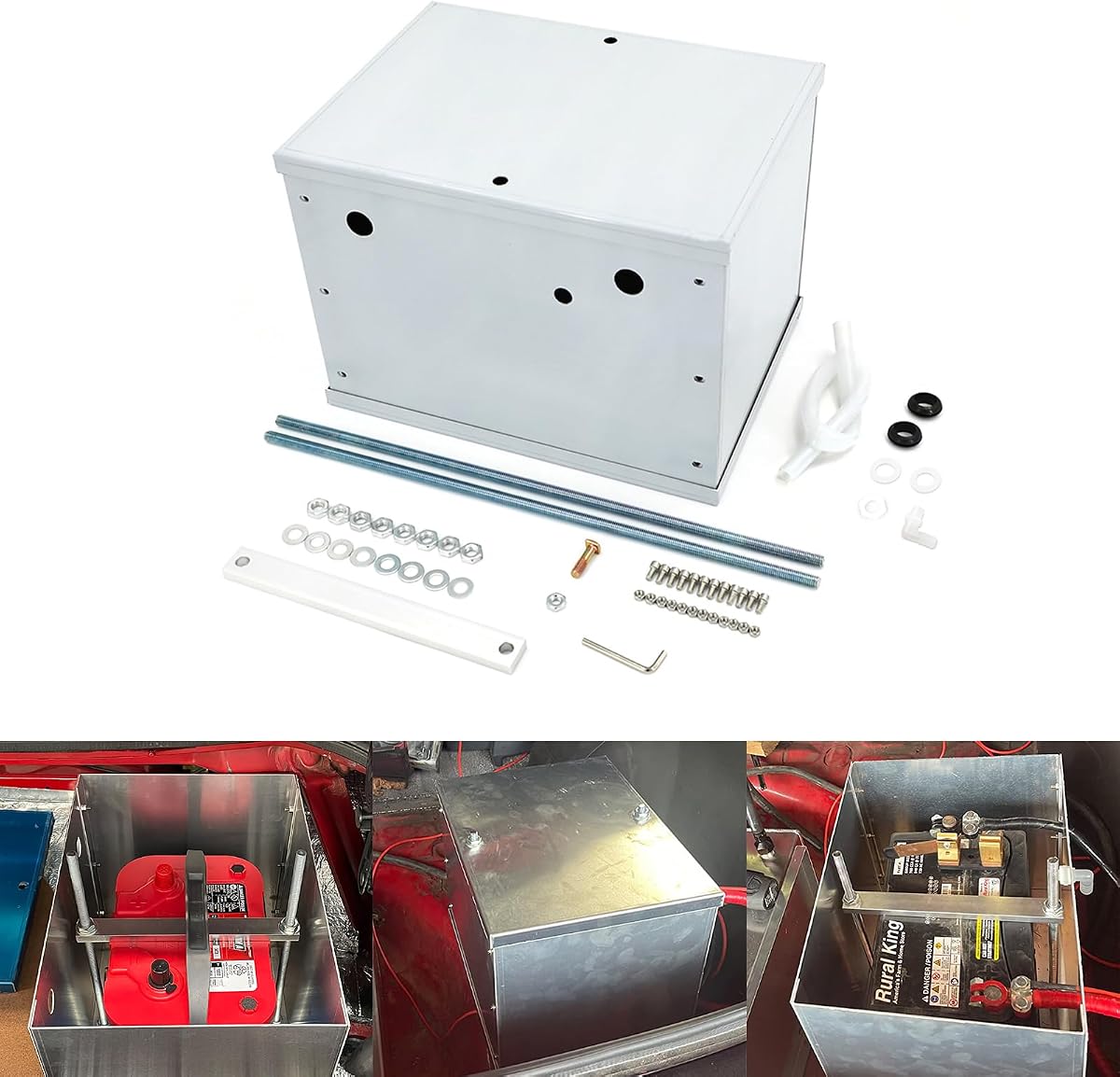


This Complete Aluminum Battery Box Relocation Kit has a 4.3 rating and stands out as the most self-contained option in the list. It combines a sealed aluminum enclosure, battery connections, performance cable, a breather system, grommets, and a wingnut-style hold-down, reducing the number of separate parts needed for a race-inspired installation.
We may earn a commission when you buy through this link, at no additional cost to you.
The included cable set is a major practical advantage. The kit provides 16 feet of 5 AWG positive cable and 3 feet of 5 AWG negative cable, along with positive and negative battery connections. The sealed box is described as suitable for street, race, custom truck, and SUV applications, giving it wider relevance than a remote terminal kit that only improves charging access.
Its main compromise is the broad wording around universal fitment. A universal enclosure can offer useful installation freedom, but the final outcome still depends on the battery's dimensions, the available mounting area, cable routing, and the vehicle's electrical requirements. Buyers should also verify whether their existing terminals and connection style work with the supplied hardware.
This is the strongest recommendation for someone who wants a coordinated box-and-cable package rather than assembling individual components. It is especially appropriate for race, off-road, custom, or weight-sensitive builds where a protected battery location and reduced engine-bay clutter are priorities. Confirm the physical dimensions and terminal arrangement before ordering.
The box, both cable colors, battery connections, hold-down, breather fitting, breather tube, and grommets are all listed as included. That breadth makes the kit easier to plan around, although owners should still inspect their vehicle's factory terminals, grounds, cable path, and mounting points.
The fully sealed aluminum enclosure is intended to contain the battery in street, race, truck, and SUV applications. The breather components provide a more thoughtful installation than an open tray, while the wingnut hold-down makes repeated battery access convenient.
We may earn a commission when you buy through this link, at no additional cost to you.
This Group 24 relocation cable kit carries a 4.2 rating and is built around 2 AWG wiring, making it the premium cabling option in this roundup. It includes a 20-foot red positive cable and a 5-foot black negative cable for top-post batteries, providing a useful combination of reach for the positive run and a shorter route for ground placement.
We may earn a commission when you buy through this link, at no additional cost to you.
Its Group 24 designation narrows the intended use, but that specificity can be helpful for buyers who already know their battery format. The relatively heavy 2 AWG cable is appropriate for a relocation that requires substantial conductor size, while the included lengths make it possible to plan a remote installation without beginning with bare wire and separate lugs.
The product is a relocation cable kit rather than a full enclosure-and-tray system. It does not supply a battery box, hold-down, mounting bracket, or complete set of terminal hardware based on the supplied information. The top-post and Group 24 details also make careful compatibility checking essential.
Choose this kit when your build already has an appropriate box or tray and needs robust, long cable runs. It is a strong fit for a custom or performance project where conductor size and the generous positive lead matter more than having every enclosure component in one package. Confirm battery post style, terminal dimensions, and routing requirements before purchase.
The 20-foot positive lead gives installers meaningful routing flexibility for a rear-compartment or otherwise remote battery location. The 5-foot negative lead is better suited to a nearby ground point, though the actual route and electrical-system requirements determine whether the supplied lengths are appropriate.
This kit focuses on the cable half of a relocation rather than the box, tray, and hold-down. That makes it useful for builders with an existing enclosure, but a complete installation will still require compatible terminals, a secure battery restraint, and adequate insulation throughout the routed path.
We may earn a commission when you buy through this link, at no additional cost to you.
This 2 AWG top-post cable kit has a 4.1 rating and offers a straightforward wiring solution for a battery relocation project. It supplies a 20-foot red cable and a 5-foot black cable, giving installers the conductor size and route length needed to connect a remote battery to a vehicle's starting system.
We may earn a commission when you buy through this link, at no additional cost to you.
The compact 2 AWG specification is the product's most important feature. It is substantial enough to suit high-current automotive battery work while remaining easier to route than larger conductors in tight spaces. Red and black cables also reduce polarity confusion during installation when they remain clearly identified throughout the run.
Like the other cable-focused product in the top three, this is not presented as an all-in-one battery box system. There is no stated enclosure, tray, mounting bracket, or hold-down in the supplied information. Top-post compatibility may also require additional care if the battery uses another terminal arrangement or if the installer needs a specific lug style.
This kit is best for a builder who has already selected a secure battery location and needs substantial cable lengths. It can be particularly useful when relocating a battery into a trunk or another compartment where the starter lead requires an extended route. Pair it with a proper enclosure, battery restraint, compatible terminals, and correctly sized ground connection.
A 20-foot positive lead provides considerable routing freedom, which is valuable when the battery is moved away from the starter or when a safe path must pass around structural and exhaust components. The 5-foot negative cable is more likely to suit a close ground point but should be verified against the proposed layout.
Relocating a battery safely requires more than connecting two conductors. The battery also needs a suitable enclosure or tray, a strong hold-down, compatible terminals, secure routing, and a properly implemented ground. This kit addresses the cable portion of those requirements.
We may earn a commission when you buy through this link, at no additional cost to you.
The Single Battery Relocation Kit earns a 4.9 rating, the highest among the ten products compared. It is described as an automotive performance component engineered for reliable operation, durable construction, and precise vehicle fitment, making it an attractive option for a clean, purpose-driven relocation.
We may earn a commission when you buy through this link, at no additional cost to you.
Its single-battery focus distinguishes it from universal boxes and general cable sets. For a vehicle that needs one battery moved out of the engine bay, the approach can reduce weight concentration, open up usable space, and make the electrical layout more deliberate. The stated suitability for maintenance, restoration, and performance upgrades broadens its audience.
The limited product description means buyers need to ask key questions before ordering. The supplied information does not state the included cable lengths, terminal details, enclosure material, hold-down style, or exact vehicle applications. Precise fitment should therefore be confirmed through the product listing rather than assumed from the product name.
This is a strong budget-oriented recommendation for someone who values a targeted single-battery solution and a strong customer rating. It is most appropriate when the buyer knows the exact application and can verify the mounting points and electrical connections. It may be less convenient for a custom build that needs universal dimensions, extra cable, or a complete enclosure package.
A single-battery kit is easier to integrate than a multi-battery system because it avoids unnecessary complexity. For maintenance, restoration, and performance work, that focused approach can produce a more orderly result when the vehicle's electrical design calls for one relocated battery.
The emphasis on precise vehicle fitment is useful, but it also makes compatibility the most important pre-purchase check. Buyers should compare mounting locations, battery dimensions, terminal orientation, cable exits, and required grounds with the full product information.
We may earn a commission when you buy through this link, at no additional cost to you.
This 40-foot 0-gauge CCA battery cable set has a 4.6 rating and is the most flexible wiring option here. It includes 20 feet of red wire and 20 feet of black wire, along with matching lug terminals and three-to-one heat-shrink tubes for a more complete termination package.
We may earn a commission when you buy through this link, at no additional cost to you.
The cable is described as a true 0 AWG standard with a stated 250-amp rating. Its elastic PVC jacket is designed to resist impact and provide clear red and black polarity identification. That makes it useful for a relocation, amplifier wiring, a trolling motor, a winch, or other high-current work where substantial conductor size and routing flexibility are beneficial.
CCA means copper-clad aluminum, and that distinction should guide expectations. It differs from a solid-copper or stranded pure-copper battery cable in construction, so buyers should consider the starting load, routing environment, bend frequency, and connector method. The product also does not provide a battery box, tray, or hold-down, meaning it is a cable component rather than a complete relocation system.
This set is best for a builder who wants substantial wire in generous lengths and values having lugs and heat-shrink included. It can support a custom relocation when paired with a secure enclosure and correctly rated connections. For installations with sustained extreme current or frequent flexing, users should assess the conductor material carefully before finalizing the build.
Twenty feet of each color gives an installer room to route around engine components, body panels, exhaust parts, and structural obstacles. Extra length can be useful when the battery is moved into a trunk, bed, or rear-compartment arrangement, although excess cable should be secured properly.
Matching lug terminals and heat-shrink tubes reduce the need for separate finishing supplies. The installer still needs to confirm that the lug dimensions match the battery posts, terminal studs, alternator connection, starter connection, and chosen ground point.
We may earn a commission when you buy through this link, at no additional cost to you.
This Universal Aluminum Battery Box has a 4.6 rating and provides a sealed enclosure without including the cable set. Its bolt-on design and stated dimensions of 13.5 inches wide, 10 inches long, and 10 inches high make it a practical option for a rear-compartment installation where enough space is available.
We may earn a commission when you buy through this link, at no additional cost to you.
Compatibility information specifically calls out 1964–2009 V6 and V8 Ford Mustang applications, including GT, LX, GT500, Cobra, Steeda, Roush, and Saleen examples. The PVC protective film coating is intended to add corrosion resistance, while the fully sealed design is described as suitable for street, race, custom truck, and SUV applications.
The absence of cables is the clearest limitation. Buyers will need to source conductor size, length, terminal type, and appropriate protection based on their vehicle and battery. They must also confirm that the box's internal dimensions accommodate their battery and that its mounting points align with the intended location.
This box is a good match for an enthusiast who already has cable or wants to specify it separately for a custom build. The rear-compartment placement can improve weight distribution and create engine-bay space, but safe cable routing, ventilation, mounting security, and local race regulations remain the installer's responsibility.
The stated 13.5-inch width, 10-inch length, and 10-inch height make preliminary space planning easier. The battery and its terminals must still fit without interfering with the lid, hold-down, cable exits, or the surrounding vehicle structure.
The sealed aluminum design is intended for street, race, custom truck, and SUV contexts. Its Mustang-focused compatibility list is useful guidance, but universal-style naming still requires the buyer to verify mounting geometry and battery clearance for the exact vehicle.
We may earn a commission when you buy through this link, at no additional cost to you.
This remote battery terminal kit has a 4.7 rating and focuses on making battery charging and jump-start access more convenient. It includes two 3/8-inch-stud battery posts, a heavy-duty steel mounting bracket, a set of 4-gauge wires, mounting hardware, insulated protector boots, and black heat-shrink tubing.
We may earn a commission when you buy through this link, at no additional cost to you.
The approximately 53-inch wire length and stated maximum current of 150 amps make it a substantial remote-terminal package. The bracket eases installation, while the red and black protective covers help prevent accidental contact with exposed terminals and make polarity easier to identify when the posts are not in use.
Despite the product category, this is not a full battery relocation system. It leaves the battery in place and extends access points for charging or jump starting. The listed applications include cars, UTVs, ATVs, boats, Can-Am Maverick X3 vehicles, trucks, and RVs, but the short lead length limits how far the remote posts can be positioned from the battery.
This kit is ideal for an owner who wants routine battery access without opening the hood, especially in a crowded engine bay or on recreational equipment. It is not a substitute for a secure relocated battery box and hold-down. Buyers should verify available panel space, stud clearance, cable length, current requirements, and access to the battery terminals before installation.
Moving the connection point to a convenient exterior or body location can make battery maintenance faster. The threaded studs create a practical interface for compatible charging leads, while the protective covers reduce accidental contact and help distinguish positive from negative.
The included bracket, wires, mounting hardware, boots, and heat-shrink create a more complete accessory set than a pair of posts alone. A complete battery relocation still requires an enclosure or tray, a hold-down, and correctly sized main battery cables.
We may earn a commission when you buy through this link, at no additional cost to you.
This compact battery jump post kit earns a 4.7 rating and is designed to extend charging access to a convenient location. The package includes a mounting bracket, two 47-inch 7 AWG copper-core cables, and dustproof caps with a stated IP67 protection level for shielding the exposed terminal surfaces.
We may earn a commission when you buy through this link, at no additional cost to you.
The brass terminals are described as durable, conductive, and resistant to oxidation and corrosion. Red and black cables make polarity easier to recognize, while the threaded terminal design supports a stable connection. The stated application range includes UTVs, ATVs, trucks, racing cars, travel trailers, RVs, tractors, lawn mowers, diesel cars, and ships.
The main trade-off is the 7 AWG cable size. It is lighter than the 0-gauge and 4-gauge options elsewhere in this guide, so installers should consider the expected current draw, cable length, and equipment manufacturer guidance. The kit also does not relocate or enclose the battery; it provides a remote access point rather than a complete battery system.
This product is a good choice when convenient jump-starting or charging access matters more than moving the battery itself. Its compact bracket and relatively short leads can work well in tight engine compartments or on equipment where the battery remains nearby. Confirm the available panel surface, terminal clearance, and connection requirements before purchasing.
The dustproof caps help keep metal surfaces covered when the posts are not being used. Their stated IP67 rating adds a useful layer of protection in wet or dusty environments, although the rest of the wiring and any exposed bracket area still need sensible routing and care.
The stated range of cars, trucks, RVs, racing vehicles, and outdoor equipment makes the kit versatile. Current requirements vary considerably, so the 7 AWG cable and 450-volt rating should be treated as product specifications rather than a guarantee that the kit suits every high-load system.
We may earn a commission when you buy through this link, at no additional cost to you.
This heavy-duty remote battery terminal kit has a 4.5 rating and provides a practical way to extend battery access to a convenient location. Its heavy-duty mounting bracket, 4-gauge wire set, and remote terminal posts are particularly relevant to cars, Can-Am X3 vehicles, UTVs, ATVs, and boats.
We may earn a commission when you buy through this link, at no additional cost to you.
The wires measure approximately 53 inches and are stated to accept up to 150 amps. Red and black protective covers help prevent accidental contact with the terminal surfaces and make the positive and negative sides easier to distinguish. A bracket is included to make the posts more convenient to position and secure.
Like the other remote-terminal products, it does not move the battery into a separate compartment. It improves access rather than relocating the battery, and the finite cable length restricts how far the posts can be placed. Installation also requires an appropriate mounting surface and care to prevent the leads from contacting hot, sharp, or moving components.
This kit suits an owner who regularly charges, jump-starts, or services a battery and wants the connection point closer at hand. Its heavier cable specification is a useful distinction from lighter remote-post alternatives. It should not be selected as the sole solution for a weight-distribution project, because a box, tray, and hold-down would still be required.
The 4-gauge wire provides a more substantial connection than the smaller 7 AWG option in the guide. The stated 150-amp capacity provides a useful reference, but the battery, charger, vehicle, and load should still determine whether the cable and terminals are appropriate.
The bracket is intended to make mounting quicker and more convenient. A good final location remains reachable for a charging lead, protected from weather and accidental impact, and separated from hot or moving vehicle components.
We may earn a commission when you buy through this link, at no additional cost to you.
This Universal Billet Battery Mount has a 4.5 rating and focuses on securely retaining a battery in a trunk, race car, truck, or custom vehicle. Its reinforced base plate, top plate, three 3/8-inch all-thread hold-downs, and anti-vibration hardware form a restrained, substantial mounting system.
We may earn a commission when you buy through this link, at no additional cost to you.
Compatibility is a major strength. The kit supports Optima Red Top models 34 and 34/78, Yellow Top models D34 and D34/78, and Blue Top models 34M and D34M. It can accommodate batteries up to 10.5 inches long, 6.95 inches wide, and 6.7 inches high using the included thread sleeves, with longer 3/8-16 all-thread available for batteries over 7.4 inches high.
The product does not provide a fully sealed enclosure, so it is better suited to a clean, protected trunk or engine-bay installation than to an exposed, wet, or debris-heavy location without additional protection. The 34R exclusion must be noted carefully, and the battery's physical dimensions and terminal locations should be measured before ordering.
This mount is the strongest option here for a builder who already has a suitable battery box or wants an open, race-style tray. Its broad dimensional range, reinforced construction, and anti-vibration hold-downs make it especially appealing for performance vehicles. For exposed or wet installations, add an appropriate enclosure and weather protection.
Three all-thread hold-downs keep the battery from shifting more securely than a single light strap or clamp. The anti-vibration hardware and reinforced plates are intended for off-road racing and daily driving, where movement and road vibration can fatigue an inadequately secured installation.
The listed Optima coverage and generous size envelope make the tray adaptable across many battery configurations. The 34R exclusion is important, and the included thread sleeves should be checked carefully for taller batteries that may require longer 3/8-16 all-thread rods.
We may earn a commission when you buy through this link, at no additional cost to you.
Choosing a battery relocation kit means balancing the reason for relocation, the available space, the battery's dimensions, the current-carrying cable requirements, and the need for secure retention. The most suitable kit is the one that fits the vehicle and electrical system without creating unsafe routing or mounting compromises.
Battery relocation serves several different purposes. Moving a battery out of the engine bay can improve weight distribution, increase space for performance components, simplify access, or create a cleaner appearance. A remote terminal kit solves a different problem: it makes charging and jump-start access easier while leaving the battery in its original location. Before comparing parts, decide whether the project requires an actual enclosure or merely a more accessible connection point. A complete relocation also needs a box or tray, a hold-down, appropriate cables, terminal connections, and a sound ground.
Battery dimensions should be measured rather than estimated, and the physical shape matters as much as the group number. Check the box or tray's internal length, width, and height, then allow room for terminal posts, cable bends, the hold-down, and the lid. A mount may list a maximum battery size, but a battery can still fail to clear a bracket, wall, cable exit, or lid. For trunk installations, also inspect access around the battery, nearby body panels, sharp edges, and the route back to the starter.
Cable gauge and length should follow the vehicle's starting current, alternator output, accessory load, and electrical design. The products reviewed range from 7 AWG remote-terminal leads to 2 AWG and 0-gauge relocation cable. Longer positive leads provide routing flexibility, while shorter negative leads are often easier to connect to a nearby ground. Look for correct polarity identification, suitable insulation, and a conductor construction appropriate to the load. A CCA cable is also a different material from pure copper, so compare its specifications with the demands of the installation.
Top-post batteries, side-terminal batteries, and batteries with different post dimensions require compatible cable ends or terminal adapters. The Group 24 cable kit and the top-post cable kit are intended for particular battery arrangements, while the remote-terminal products use threaded studs. A tray's compatibility list matters just as much: the universal billet mount supports several listed Optima configurations but explicitly excludes the 34R. Confirm the exact battery model, post orientation, and terminal clearance before making a selection.
A relocated battery must remain stationary during acceleration, braking, cornering, and road vibration. The billet mount offers three reinforced hold-downs and anti-vibration hardware, while the complete aluminum box uses a wingnut-style hold-down for convenient access. An open tray needs at least as much restraint as a box because the battery remains more exposed. Check whether the hardware resists rotation, whether the hold-down bears on a suitable part of the battery, and whether repeated installation can be performed without loosening unrelated components.
A sealed aluminum enclosure helps contain the battery in a race, off-road, or custom vehicle application. The complete box also includes a breather fitting and breather tube, adding an installation consideration for a sealed unit. An open billet tray provides restraint without enclosure, making it better suited to a protected trunk or engine bay. Evaluate the location for water, road salt, dirt, heat, impact, and access to hot components. None of these factors should be handled by assuming a generic universal label guarantees suitability.
A complete package can simplify a build, but completeness varies sharply across the category. One aluminum kit includes the box, cables, battery connections, breather parts, grommets, and hold-down. Cable kits provide conductors but not an enclosure or restraint. Remote-terminal kits include a bracket, short leads, and protective covers but leave the battery in place. Compare the actual bill of materials before deciding which additional parts are required, paying attention to terminal adapters, fasteners, grounds, inline protection, and battery ties.
The easiest installation is the one that can be planned before removing the factory battery. Identify the new mounting surface, cable route, ground location, access needed for charging, and clearance around the hood, trunk lid, intake, exhaust, and suspension. Some kits are bolt-on, while others require bracket fabrication or careful adaptation. Remote posts should be positioned for convenient access but away from sharp edges and moving components. If the battery will be serviced often, favor a hold-down that can be operated with ordinary hand tools.
Begin by identifying the vehicle's electrical configuration, the battery's exact dimensions, and the purpose of the relocation. Confirm that the chosen box, tray, cable set, or remote post matches the battery and terminal arrangement. Measure the intended location, inspect its surface, and plan how the battery, lid, hold-down, and cables will be accessed. Disconnect the existing battery according to the vehicle manufacturer's procedure before removing or relocating any component.
Install the enclosure or tray on a sound, rigid surface and use the specified fasteners to prevent movement. Route positive and negative cables carefully, protecting them from sharp edges, heat, moving parts, and abrasion. Keep the positive cable away from unintended metal contact, establish a proper ground, and use compatible terminals. For a remote post kit, position the bracket where charging leads can reach it without creating a trip or damage hazard. For a sealed box, install the supplied breather components as directed and confirm that no moisture or debris can enter.
Inspect the installation before reconnecting the battery and again after the first road test. Check hold-down tension, terminal security, cable strain, and the clearance of nearby components. Periodically clean the battery terminals and mounting surfaces, inspect the cable jacket for damage, and confirm that the hold-down remains tight. Use the protective covers on remote posts when they are not connected, and remove corrosion with an appropriate terminal-cleaning method rather than allowing conductive residue to remain. Retire or replace damaged cables and loose hardware promptly.
A battery relocation kit moves a battery away from its original position or creates a more accessible connection point. Common goals include improving front-to-rear weight distribution, opening engine-bay space, simplifying charging access, or supporting a cleaner race and custom build. The correct kit depends on whether the battery itself is moving or only its terminals.
No. Universal products still have dimensional, terminal, and mounting limitations that must be checked. The enclosed universal boxes still need adequate clearance, while the billet tray has a specific Optima compatibility list and excludes the 34R. Measure the battery and installation area rather than relying only on the product label.
A relocation generally needs a secure enclosure or tray to contain and restrain the battery. A remote terminal kit improves access but does not move the battery, so it is not a substitute for a box and hold-down. A complete installation also requires suitable cables, terminals, and a correctly implemented ground.
Cable size should reflect the vehicle's starting and charging demands, conductor material, cable length, and applicable electrical-system guidance. The reviewed options include 7 AWG, 4 AWG, 2 AWG, and 0-gauge conductors. Longer routes and demanding systems may require heavier cable, while compatibility with the battery posts and terminals remains essential.
Not exactly. A remote terminal kit extends access to the battery for charging or jump starting, but the battery stays in its original location. It is useful in crowded engine compartments and on equipment, yet it does not improve weight distribution or create a protected battery compartment.
Use a rigid tray or enclosure and a hold-down designed for the battery's dimensions. The universal billet mount uses three reinforced threaded hold-downs with anti-vibration hardware, while the complete aluminum box includes a wingnut-style hold-down. Recheck tension after initial installation because vibration and movement can loosen hardware.
Moving a battery from the front of a vehicle to a rear location can shift its mass backward and potentially improve balance. The result depends on the battery weight, original location, new position, and the rest of the vehicle. A remote terminal kit does not achieve this because it leaves the battery in place.
Confirm the battery dimensions, terminal style, cable length, mounting surface, cable route, ground location, and access to the battery after installation. Also check for interference with heat sources, moving parts, sharp edges, body panels, and the hood or trunk lid. Electrical compatibility and secure retention should be resolved before final assembly.
The Complete Aluminum Battery Box Relocation Kit is the most well-rounded option because it combines a sealed enclosure, cables, connections, breather components, grommets, and a hold-down. The Universal Billet Battery Mount stands out for strong retention and broad battery compatibility, while the Single Battery Relocation Kit offers a focused, vehicle-specific option with the highest rating in the guide.
Your priorities should reflect the actual project. Choose a full box or tray when moving the battery, a heavy cable kit when a secure enclosure already exists, and remote posts when the main goal is easier charging access. Always verify battery dimensions, terminal configuration, mounting geometry, conductor requirements, and protection from heat, moisture, and impact.
Current prices and product availability can change, so compare the complete package and the seller's current specifications before ordering. Read recent customer feedback, confirm the included parts, and retain all manufacturer instructions. The most suitable battery relocation kit is not simply the one with the most accessories, but the one that fits safely and completely within your vehicle and electrical system.