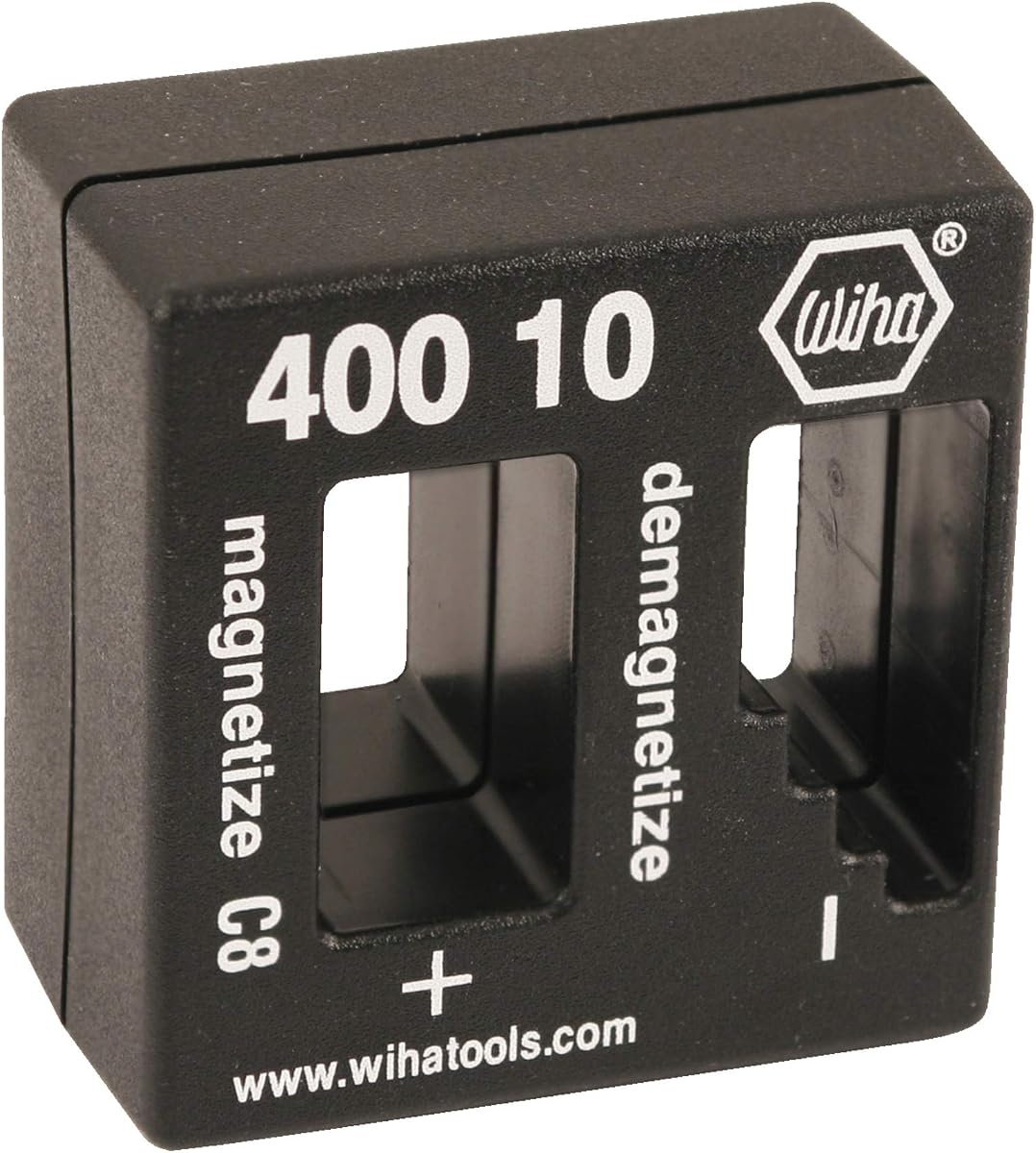
Wiha 40010 Magnetizer Demagnetizer
4.5Editor score
Two C8 ceramic magnets
No batteries required
Pocket-sized plastic housing
Handles tools over 1.35 inches
Discover the best magnetizer demagnetizer tools for screwdrivers and bits, with expert comparisons of magnetic strength, portability, and ease of use.
Magnetizer demagnetizer tools give screwdrivers, bits, and other steel implements a controlled magnetic advantage when holding fasteners, then remove that attraction when working around electronics or delicate parts. The best model should switch direction quickly, fit common tools, resist accidental magnetic interference, and be simple enough to use without batteries or complicated controls.
This guide compares ten magnetizer demagnetizer tools based on the supplied product information, paying close attention to magnetic design, supported tool sizes, portability, construction, and intended work environments. It includes compact single-unit options, multi-piece shop sets, and specialized products for precision screwdrivers, drill bits, and electronics repair.
Each pick reveals which task it appears best suited to, with separate notes for standout features, practical limitations, and ideal users. Ratings and specifications reflect the information available when the roundup was prepared, while product prices and availability can change, so shoppers should confirm current details before purchasing.
4.5Editor score
4.7Editor score

4.5Editor score
This side-by-side comparison highlights each product's magnetic mechanism, tool compatibility, portability, and best use case, helping distinguish precision-focused units from general-purpose shop tools and multi-piece sets.




The Wiha 40010 is a compact magnetic tool designed to magnetize and demagnetize steel implements without batteries or electrical power. Its 4.5 rating reflects a practical combination of portability, clear dual-purpose operation, and a housing small enough to move between a tool pouch, workbench, or electronics-repair kit. It is particularly useful when a technician wants the holding benefit of a magnetic screwdriver without leaving a strongly magnetic tip near delicate components.
We may earn a commission when you buy through this link, at no additional cost to you.
Two C8 industrial permanent ceramic magnets provide the working elements. The product is intended for items more than 1.35 inches long and either 1/8 inch or 3 millimeters in diameter, allowing it to address common precision bits as well as small steel tools. Its pocket-sized enclosure measures approximately 2 by 2 by 1.125 inches, so it occupies little room while still offering a practical way to control magnetic attraction.
The main limitation is the stated minimum length and diameter compatibility. While that covers many screwdriver bits and small tools, the product is not a universal solution for every shaft size or bulky implement. The description also lists two C8 magnets and emphasizes instant operation, but it does not provide a numerical field-strength specification comparable to the Bosch model. Buyers seeking a simple, reliable, compact unit may find those trade-offs entirely reasonable.
This is a strong choice for electricians, technicians, electronics repairers, and DIY users who need frequent magnetic control without carrying a larger tool. It also suits anyone who wants a dedicated pocket item rather than a multi-unit shop set. For basic screwdriver and bit applications, the Wiha combines a clear physical design with effective portability, making it our best budget selection.
Because the Wiha 40010 uses permanent magnets rather than batteries or electrical controls, it can be used immediately wherever the work takes place. That simplicity is valuable in mobile repair, field service, and crowded workbench environments where speed and reliability matter more than adjustable settings.
The small two-inch-square format makes the unit easy to retain in a jacket pocket or small parts organizer. Its plastic housing is described as shatter-resistant, which provides a practical outer layer for a tool that may be dropped or handled during active repair work.
We may earn a commission when you buy through this link, at no additional cost to you.
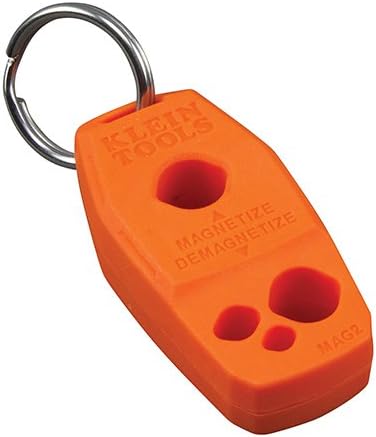
The Klein Tools MAG2 combines a 4.7 rating with a straightforward screwdriver-centered design, making it the strongest all-around option in this roundup. It uses rare-earth magnets to magnetize and demagnetize tips, allowing users to hold screws when needed and reduce unwanted magnetism when working around electronics. Its appeal comes from broad screwdriver compatibility and a quick single-swipe operating method.
We may earn a commission when you buy through this link, at no additional cost to you.
The tool fits precision screwdrivers, 1/4-inch slotted drivers, and number 2 and number 3 Phillips drivers according to the supplied information. To magnetize, the user inserts the screwdriver fully into the magnetizing slot and draws it out slowly without rotating the shaft. That process is straightforward enough for repeated use and avoids the need for batteries, charging, or electrical connections.
Klein includes a stainless-steel key ring, making it easy to attach to a tool bag or backpack rather than leave loose in a drawer. However, the product information does not state a numerical field strength or offer the same explicit magnetic-element count found in the Bosch description. It is also more screwdriver-focused than products designed to mount directly on a bit or accommodate a broader collection of ferrous objects.
The MAG2 is an especially good recommendation for electricians, general repair technicians, builders, and serious DIY users who work with multiple screwdriver types. The 4.7 rating is the highest listed among these products, while the rare-earth construction and portable key ring reinforce its position as the editor's choice. It offers an excellent balance of specialization, convenience, and straightforward operation.
The controlled draw-through method allows a screwdriver to become magnetic or lose its magnetic charge in a single motion. That convenience makes the MAG2 useful when a technician alternates between holding fasteners and handling components that should remain free of loose metal.
Compatibility with precision, slotted, and common Phillips drivers reduces the need to own multiple magnetizing tools. Users working across different screw types can standardize on one compact accessory instead of finding a separate solution for each driver.
We may earn a commission when you buy through this link, at no additional cost to you.
The JPT Bi-Directional Magnetic Block is designed around a simple need: screwdriver tips should hold screws during installation but release unwanted magnetic attraction during electronics work. It carries a 4.4 rating and offers power-free operation through a marked slot. Its bi-directional design provides both magnetization and demagnetization in a compact format intended for electricians, mobile repair shops, computer technicians, and automotive workshops.
We may earn a commission when you buy through this link, at no additional cost to you.
The operating process is direct: slide the screwdriver through the marked slot to change its magnetic state. Magnetization helps screws remain attached to the tip, particularly where access is limited, while demagnetization is useful around electronic parts or delicate components. The tool needs neither electricity nor batteries, reducing setup requirements and allowing it to be carried without power-management concerns.
Its strongest benefit is workflow versatility rather than documented technical power. The supplied details do not state a field-strength value, magnet material, or exact dimensional limits, and the product description repeats the no-power feature. Those omissions make it harder to compare directly with the Bosch and Klein products on objective magnetic specifications, but the design remains clearly aimed at common repair tasks.
This JPT block is best for technicians who frequently alternate between screwdriving and electronics work and want a small, uncomplicated tool. It is also suitable for field service kits where every accessory should be portable and immediately usable. Buyers who prioritize explicit field-strength data may prefer the Bosch option, while those who value simple bi-directional control will find this design practical.
The ability to demagnetize a tip is particularly valuable when small metal parts must not cling to the driver. This makes the product relevant not only to general screwdriving but also to electronics repair workflows where contamination and accidental pickup can complicate a task.
Its compact format suits a toolbox, pocket, or workshop kit without requiring a separate power supply. The result is a tool that can be deployed at a customer site, in a mobile repair environment, or at a fixed bench with minimal adaptation.
We may earn a commission when you buy through this link, at no additional cost to you.
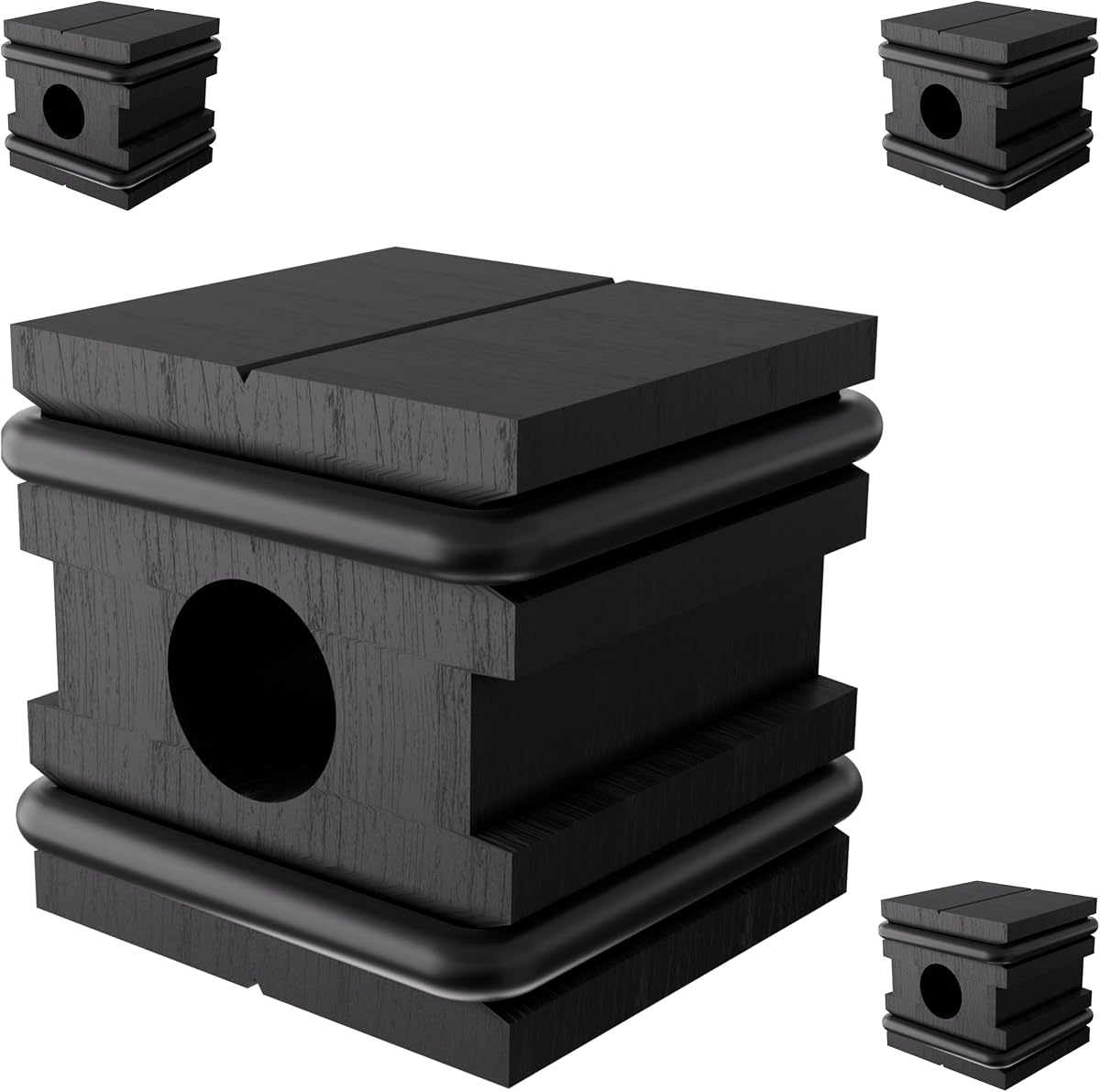
The Master Magnetics Screwdriver Magnetizer Demagnetizer 4 Pack is built for users who want several magnetic tools available around a shop. Its 4.1 rating is the lowest among the ten products, but the set addresses a distinct practical need: keeping one unit at a bench, another in a toolbox, and the others in mobile or project-specific locations. Its bonded rubber construction and steel-toolbox attachment add flexibility beyond simple magnetization.
We may earn a commission when you buy through this link, at no additional cost to you.
Magnetization is performed by sliding a tool into and out of the center hole, while demagnetization uses one of the exterior channels. This visual and physical separation makes the two modes easy to distinguish. The center position helps control small screws and metal components, and the exterior channels provide an alternate path for reducing magnetism when a tool needs to be prepared for a different task.
The four individual units are described as approximately one inch long and one inch wide, making them notably compact. The set also holds itself to a steel toolbox or similar surface, so the units can remain visible and accessible. The rating suggests that some buyers may find room for improvement, although the supplied information does not identify a specific weakness or durability problem.
This four-pack is a strong fit for mechanics, repair shops, and DIY users who work in several locations. It reduces the inconvenience of repeatedly moving one magnetic tool from a vehicle to a bench and back. Those wanting a single higher-rated unit may prefer the Wiha or Klein, but buyers who value distribution and convenient storage have a reason to choose this set.
Using the center hole for magnetization and exterior channels for demagnetization gives users a visible distinction between operating states. That design can reduce hesitation at the bench and makes the tool approachable for less experienced users.
Multiple units support shared shops, service vehicles, and busy DIY workspaces. Each compact piece can remain near the relevant work area or adhere to a steel surface when it is not being used.
We may earn a commission when you buy through this link, at no additional cost to you.
The Master Magnetics Blue 4 Pack is a general-purpose magnetic accessory set rated at 4.4. It combines four individually sized units with a broad compatibility claim covering screwdriver tips, bits, screws, drill bits, sockets, nuts, bolts, nails, and other ferrous objects. That versatility makes it appealing to mechanics, fabricators, builders, and DIY users who work with more than one class of steel tool.
We may earn a commission when you buy through this link, at no additional cost to you.
Each unit is approximately 2 by 2 by 1 inches and uses permanent magnets, so no battery or electrical connection is necessary. Four units can be distributed throughout a workshop, stored in different toolboxes, or kept near separate work areas. The set is especially useful for users who want immediate access to magnetic assistance without repeatedly retrieving a single device from a central storage point.
The product information gives less detail about the exact magnetization and demagnetization method than the closely related Master Magnetics four-pack listing. It also does not provide a numerical magnetic-field specification, and the compatibility language is broad enough that actual fit may depend on the shape and dimensions of the chosen tool. Buyers should therefore consider the physical design as well as the stated applications.
This set is best for a shared shop or a technician maintaining several active workspaces. It provides a convenient way to put magnetic control near the work instead of relying on one shared accessory. Those seeking a compact single tool can select the Wiha or Master Magnetics 07524, but this four-piece configuration is better for broad, multi-location coverage.
The stated compatibility reaches beyond screwdrivers to drill bits, sockets, nuts, bolts, and nails. That range makes the set useful for assembly, repair, and general shop tasks in which holding small ferrous pieces can reduce fumbling.
No batteries or electrical power are required, so each unit works immediately after removal from storage. Multiple pieces can remain at separate workstations without creating charging or power-management tasks.
We may earn a commission when you buy through this link, at no additional cost to you.
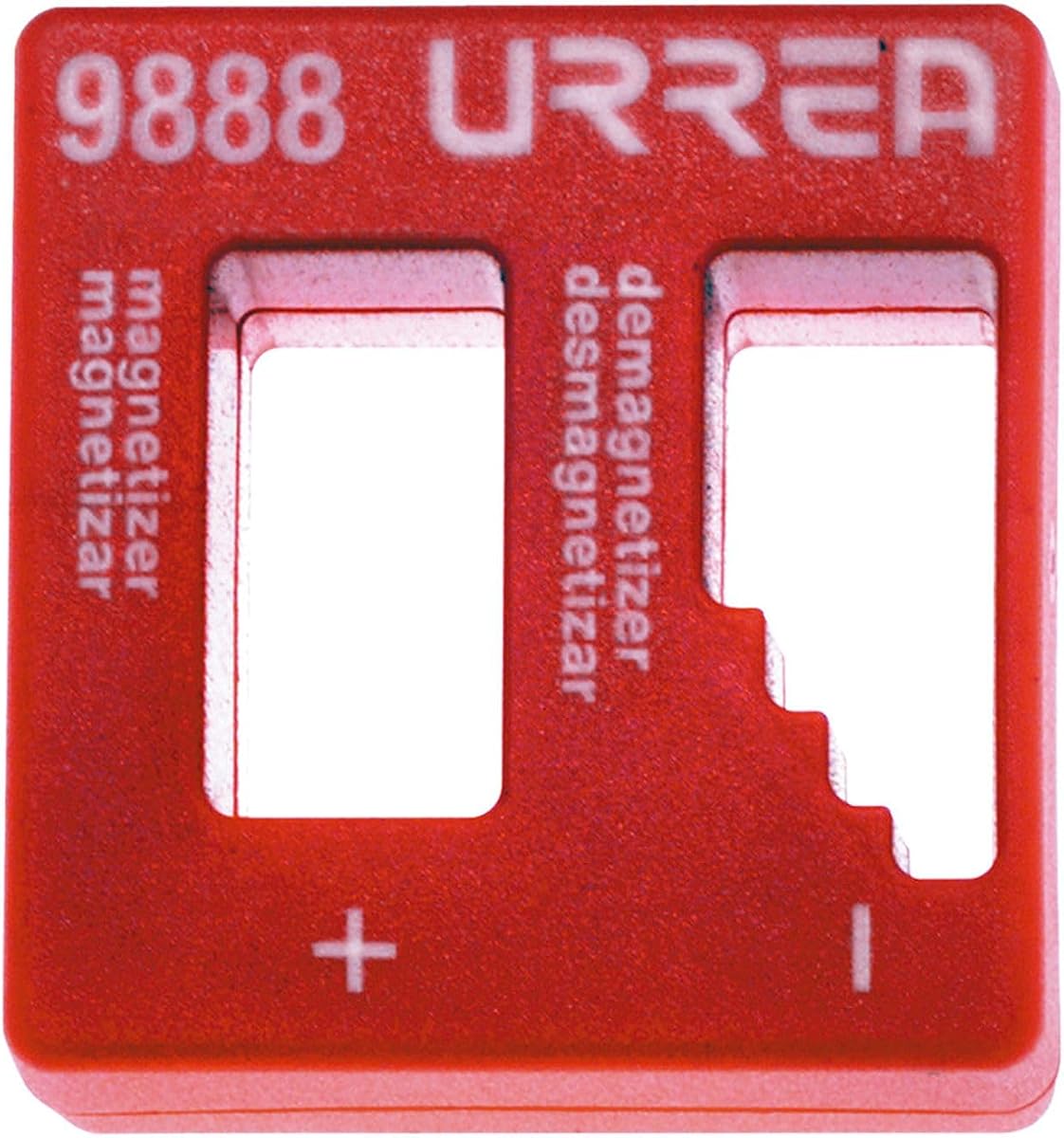
The URREA 9888 uses two clearly defined cavities to deliver opposite magnetic functions. Its 4.5 rating places it among the stronger-reviewed products in the group, and the labeled positive and negative terminals make the operating method easy to understand. It is particularly relevant for technicians who need a screwdriver to release magnetic attraction when working around electronic parts.
We may earn a commission when you buy through this link, at no additional cost to you.
To magnetize a screwdriver, the user inserts the tip into the positive terminal cavity. When demagnetization is needed, the tip enters the negative terminal cavity instead. The physical separation between the two positions provides a straightforward mental model: users choose the cavity that matches the task rather than relying on a switch or an ambiguous sliding direction.
The product is also described as suitable for offset screwdrivers, which adds support for less conventional driver shapes. On the other hand, the supplied information does not provide dimensions, magnet material, field strength, or a detailed list of compatible diameters. That limited technical disclosure makes it more important to verify physical fit before buying, especially for unusual shafts or bits.
The URREA 9888 is a sensible option for electricians, electronics repairers, and general users who value intuitive operation. It is less compelling for buyers who need detailed specifications or a multi-piece distribution set. Still, the two-terminal design and 4.5 rating provide a good balance of simplicity and apparent customer satisfaction.
The labeled cavities make the intended function more visible than an undifferentiated magnetic slot. Users can move between holding fasteners and releasing magnetic attraction by selecting the appropriate side of the tool.
The demagnetization cavity addresses a specific electronics concern: unwanted metal adhering to a driver tip. Reducing that attraction can help keep small components from being carried unintentionally during delicate work.
We may earn a commission when you buy through this link, at no additional cost to you.
The Bosch Magnetizer/Demagne is the most technically specified option in this roundup, with two ferrite magnets, a minimum field strength of 90mT, and a listed weight of 80 grams. Its 4.5 rating reinforces the value of that documented performance. The product is positioned for quick magnetization and demagnetization of screwdrivers and bits, making it a credible premium choice for professional users.
We may earn a commission when you buy through this link, at no additional cost to you.
A minimum 90mT field strength gives shoppers a clearer basis for comparison than most products in the category provide. The ferrite magnets are intended to help screws adhere securely to a magnetized screwdriver, while the demagnetization function restores a more neutral working state. Self-explanatory icons reduce the learning curve and help distinguish the two directions during use.
Bosch's product description lists fewer supported tool types and dimensions than some competing listings, so buyers needing an exact shaft-size range should check fit before purchase. The 80-gram weight, however, is an explicit and useful portability specification. It suggests a tool designed to be moved between tasks without adding meaningful bulk, although the actual housing dimensions are not provided.
This model suits professional technicians, mechanics, electricians, and discerning DIY users who want a documented magnetic field rather than a generic promise of strong attraction. It is our best premium selection because the numeric field strength, measured weight, dual ferrite construction, and icon-guided operation create a well-specified package for frequent work.
The stated minimum 90mT field strength gives this model a measurable point of comparison. For users concerned with holding power on screws and bits, that documentation adds confidence that the magnetic output was a defined design target.
At 80 grams, the tool is light enough to remain handy during mobile work. The use of two ferrite elements and clear operating icons also balances technical performance with straightforward handling.
We may earn a commission when you buy through this link, at no additional cost to you.
The Master Magnetics 07524 is a straightforward magnetizer/demagnetizer for small steel tools. Its 4.0 rating is tied for the lowest score among the products reviewed, but the basic proposition remains practical: give DIYers, mechanics, and electricians an easy way to manage magnetism without introducing batteries or complex controls.
We may earn a commission when you buy through this link, at no additional cost to you.
The supplied information highlights the product's easy-to-use construction and its ability to magnetize small tools. Those are meaningful qualities for a workshop accessory that should work without a learning curve. It is also one of the simpler products in the category, focusing on the core task rather than extensive compatibility claims or specialized mounting features.
Detailed information is limited. The listing does not state dimensions, magnet material, field strength, or a precise demagnetization method, making it difficult to assess whether the unit can accept larger bits or unusual shafts. Its 4.0 rating may reflect average satisfaction, although the supplied data does not identify specific complaints or defects.
The 07524 is a reasonable choice for a mechanic, electrician, or DIY user who wants a small magnetic control tool and does not need advanced specifications. Those needing a wider range of documented compatibility may prefer the Blue four-pack, while users who prioritize the highest rating may choose the Klein MAG2. Its appeal lies in uncomplicated utility.
The focus on small tools and easy operation makes this product a practical addition to a basic repair kit. It avoids unnecessary powered components, allowing users to focus on quickly changing a tool's magnetic state.
For everyday handling of small ferrous implements, a dedicated magnetizer can reduce the need to search for a loose magnet at the bench. This model fills that basic role in a compact format.
We may earn a commission when you buy through this link, at no additional cost to you.
The VESSEL NMC-1PB takes a different approach by attaching to a bit or driver rather than functioning only as a pass-through magnetic slot. It carries a 4.3 rating and emphasizes strong holding power, including the ability to catch long threaded fasteners. The product can be magnetized or demagnetized, giving users an added degree of control over a tool that remains magnetically active after removal.
We may earn a commission when you buy through this link, at no additional cost to you.
That residual force is a distinguishing feature. Once a bit or driver has been magnetized, the magnetic attachment can continue holding a screw or threaded component even when the VESSEL unit is taken away. The result may be useful in overhead, recessed, or otherwise awkward installations where the user needs both hands free and cannot simply balance a fastener on the tip.
The main trade-off is that the mounting format is less universal than a slot-based device. Users must confirm that the bit or driver shape suits the attachment method, and the supplied details do not provide dimensions, magnet material, or a numerical field-strength value. It is also less explicitly focused on a broad range of unrelated ferrous objects.
The NMC-1PB is best for technicians or installers who regularly work overhead or in confined spaces with threaded fasteners. Its ability to remain magnetized after detachment makes it particularly interesting for hands-free control. Users wanting a general pocket tool for multiple screwdriver styles may find the Klein MAG2 more adaptable, while this VESSEL model offers a specialized mounting advantage.
The tool remains magnetic after being removed from the attached bit or driver. That behavior can improve control when a user needs to free both hands, although it also makes deliberate demagnetization especially important around electronics.
Holding a long threaded fastener with a magnetized attachment may make overhead and confined-space work more manageable. The design transfers control away from the user's fingers and toward the end of the tool.
We may earn a commission when you buy through this link, at no additional cost to you.
The Multi-Function Magnetizer ULTRA is a bit-mounted tool designed to provide more than a simple fully magnetic state. It has a 4.4 rating and a dual-sided design: the front side offers full magnetization, while the back reduces magnetic force for stages of screwdriving that need less holding power. This makes it useful for users who want adjustable attraction without electronic controls.
We may earn a commission when you buy through this link, at no additional cost to you.
The unit also addresses iron powder and stuck particles. With the magnetizer already mounted on a bit, touching the back of an additional E-ZEN magnetizer to the mounted unit is described as a way to remove attracted iron particles. For complete demagnetization, the user removes the unit and slides its side along the bit, using a straightforward manual motion rather than a separate demagnetizing block.
Compatibility is stated for standard 1/4-inch, or 6.35-millimeter, bits used by professionals and DIYers. That is a clear size specification, although the product does not publish a measured magnetic-field value. The broad term in the listing name also gives less brand and model specificity than the other entries, so buyers may benefit from checking the final package details and physical dimensions.
This tool is best for users who work primarily with quarter-inch bits and want a mounted solution that can move between strong holding and reduced magnetism. The removable, sliding demagnetization method is particularly convenient, while the particle-removal feature adds a specialized maintenance benefit. It is a versatile alternative to simple slot-based blocks.
Flipping the unit between its front and back lets the user move from full magnetization to weaker attraction. That flexibility can accommodate different screw-driving stages without changing the bit or using another tool.
The described iron-particle removal method uses another E-ZEN magnetizer against the mounted unit. This provides a practical way to reduce unwanted debris while keeping the operating concept mechanical and straightforward.
We may earn a commission when you buy through this link, at no additional cost to you.
The right magnetizer demagnetizer depends on the tools you use, the work environments you visit, and how precisely you need to control magnetic attraction. Comparing operating methods, tool fit, portability, and documented magnetic performance is more useful than assuming every compact block offers the same results.
Slot-based devices accept a screwdriver or bit by passing it through a central opening, while mounted products attach directly to a compatible bit. A pass-through format is convenient when switching among several drivers, but it requires enough clearance around the shaft. A mounted design can remain close to the working end and may provide better control in overhead or confined spaces. Buyers should choose based on how they carry and use their bits rather than treating the formats as interchangeable. A device that sounds broadly compatible may still be limited by shaft diameter, length, tip shape, or the space needed to draw the tool through its magnetic path.
Magnetization receives much of the attention, but reliable demagnetization is equally important for electronics, instrument work, and tasks involving loose metal parts. Some products use separate positive and negative cavities, others use exterior channels or opposing sides, and some rely on a sliding pass along the bit. The distinction matters because a device that attracts strongly but does not release magnetic charge cleanly may be troublesome in sensitive work. Look for a clearly defined demagnetizing path and ensure it is compatible with the direction and geometry of your tools. Remember that complete neutralization can be more demanding than merely weakening a magnetic field.
Most listings describe their magnets as powerful or neodymium-based without providing a comparable measurement, making direct strength comparisons difficult. The Bosch model stands apart by stating a minimum field strength of 90mT and identifying two ferrite elements. If measurable performance is important, published field strength offers a more useful basis than broad marketing language. For other products, consider magnet material, intended tool size, and the inclusion of multiple magnetic elements. Strong attraction is valuable when holding screws in awkward positions, but excessive residual magnetism can be inconvenient in precision work. The best choice balances holding power with the ability to remove magnetism.
Compatibility claims should be read closely. A product may specify precision screwdrivers, 1/4-inch slotted drivers, number 2 and number 3 Phillips drivers, offset screwdrivers, drill bits, sockets, or standard quarter-inch bits. Those statements are not interchangeable, and a product that handles one category may not accommodate another. Check the dimensions of your most frequently used shafts and tips, especially if they are unusually short, narrow, wide, or nonstandard. Master Magnetics makes explicit diameter and length requirements in some listings, while other products provide only a general list of supported ferrous items. The narrower your tool collection, the more important exact fit becomes.
A magnetizer is most useful when it is close at hand. Some products are designed for a pocket or key ring, while multi-piece sets can be placed in several toolboxes, vehicles, or workstations. The VESSEL product supports direct bit attachment, which can reduce loose accessories, and the Bosch model lists a weight of 80 grams for easy handling. Conversely, a larger or more specialized tool may be better kept in a fixed case. Consider where the work happens: field service calls, vehicle repair, a crowded bench, or electronics bench. A compact unit that stays with the driver is often more valuable than a technically capable tool stored out of reach.
The best designs make the active magnetic state obvious. Labeled positive and negative cavities, exterior demagnetization channels, dual-sided housings, and self-explanatory icons all reduce the chance of using the wrong mode. A pass-through method is similarly efficient when the user draws the tool out in the prescribed direction without rotating it. Electronic controls and adjustment buttons are unnecessary in most compact tools, and battery-free operation removes charging and maintenance concerns. At the same time, a highly simplified product should still provide an understandable way to demagnetize the tool. The ideal interface can be learned in seconds and used consistently during active repair.
General assembly favors a tool that can magnetize quickly and hold a broad range of small fasteners. Overhead installation may benefit from a mounted accessory that remains attached and leaves the user's hands free. Electronics repair places a higher value on demagnetization and compact portability, while a multi-user workshop can benefit from four individual units. Electricians and mechanics often need a balance of portability and quick access. Think about the consequences of residual magnetism in each environment, especially around electronic components, compasses, sensors, or precision instruments. The most useful model is the one that matches the dominant task rather than simply the one with the most aggressive magnetic claim.
A single unit is adequate when one bench serves all your work, but several compact tools can be more useful in a busy shop. Multi-piece sets let users keep one device at a workstation, another in a vehicle, and others in specialized kits. They also provide redundancy if one unit is temporarily misplaced. The trade-off is storage and the possibility that several identical tools will be forgotten in different locations. A key-ring-mounted model or a directly attached device may solve the same problem with less duplication. Decide whether the value comes from having distinct tools ready simultaneously or simply from owning one dependable magnetic accessory.
Before magnetizing a screwdriver or bit, confirm that its length and diameter fit the device's stated requirements. Clean the shaft and tip so oil, paint, rust, or iron particles do not interfere with the magnetic path. Depending on the design, insert the tool fully into the magnetizing slot or cavity, then draw it out slowly without rotating it. Some products use a dedicated full-magnetization side instead, so follow the markings and operating direction supplied with the particular model. A controlled, straight pass helps the tool acquire the intended magnetic state consistently.
When the task changes, move the tool to the designated demagnetizing area. That area may be a negative cavity, an exterior channel, a reverse side, or a separate sliding action along the bit. Pull the tool through the demagnetizing position in the recommended direction and avoid using the magnetic path that would strengthen the charge. For mounted products, the unit may need to be removed before its side is slid along the bit. A demagnetizer cannot fully neutralize every steel tool in one pass, so repeat the action if the tip continues attracting loose chips or components.
Store the device away from watches, compasses, magnetic storage trays, data-sensitive equipment, and surfaces where a strong magnet could mark or adhere to the tool. Keep the housing closed around any exposed magnets and avoid striking, bending, or separating internal magnetic elements. If the tool attracts iron powder, it may need additional attention rather than simply more magnetization. A brief pass against a separate magnetizer, as described for the Multi-Function Magnetizer ULTRA, can help remove particles, but follow the manufacturer's instructions and avoid scraping a magnet across a coated bit.
A magnetizer demagnetizer tool changes whether a steel screwdriver, drill bit, socket, or other ferrous tool attracts small metal parts. The magnetizing function helps screws remain attached to the tip, especially in tight or overhead spaces. The demagnetizing function reduces unwanted attraction around electronics, precision components, and loose metal debris.
No. Every product in this roundup is described as operating with permanent magnets and without batteries or electrical power. That makes the tools immediately usable and removes charging, battery replacement, and power-management concerns. The only required step is following the correct magnetization and demagnetization path for the model.
Many models can handle several types, but compatibility still depends on shaft length, diameter, and tip geometry. The Klein MAG2 specifically lists precision screwdrivers, 1/4-inch slotted drivers, and number 2 and number 3 Phillips drivers. The Wiha 40010 requires items longer than 1.35 inches and 1/8 inch or 3 millimeters in diameter. Check the specifications before assuming every driver will fit.
No. Strong attraction is useful when a screw must stay on a bit, but it can be undesirable around electronics and precision work. A balanced product should magnetize effectively and release the tool's magnetic charge just as readily. Bosch is the only listed product with an explicit minimum field strength of 90mT, while other products cannot be compared objectively on field output from the supplied details.
Magnetizing gives a steel tool a magnetic charge that attracts screws and other ferrous objects. Demagnetizing reduces or removes that charge so the tip does not collect chips or carry small parts unintentionally. Depending on the model, the two functions use separate cavities, channels, sides, or a sliding action along the tool.
They can be used in electronics work when the tool's demagnetization function is applied correctly. Strong residual magnetism may cause small metal parts to stick to a bit, potentially complicating sensitive work. Users should also keep the magnetizer away from devices that can be affected by magnetic fields and should follow the device-specific operating instructions.
A single unit is usually sufficient for one technician working at one bench or carrying one device in a tool bag. Multi-piece sets are more useful when separate tools are needed in several vehicles, workstations, or project kits. They offer convenience and redundancy, although the units still need to be stored where they can be found easily.
First use the tool's designated demagnetization method to reduce the magnetic charge. Some products also provide a dedicated particle-removal technique; the Multi-Function Magnetizer ULTRA describes touching the back of another E-ZEN magnetizer to the mounted unit. Follow the instructions for the exact device and avoid dragging a magnet across coatings or delicate surfaces.
The Wiha 40010 stands out as the best budget choice because it combines two permanent ceramic magnets, dual operation, and a pocket-friendly housing without requiring power. The Klein Tools MAG2 earns the editor's choice with its 4.7 rating, rare-earth construction, broad screwdriver compatibility, and convenient key ring. For buyers seeking documented magnetic performance, the Bosch Magnetizer/Demagne provides a specified minimum field strength of 90mT and a lightweight 80-gram design.
The right choice ultimately depends on workflow. Select a slot-based model when switching among screwdriver types, a mounted model when direct bit control matters, and a multi-piece set when several work areas need their own unit. Prioritize reliable demagnetization when working around electronics, while favoring strong documented attraction when holding fasteners overhead or in restricted spaces. Also verify exact tool dimensions because broad compatibility language does not guarantee a perfect fit.
Ratings, product specifications, prices, and availability can change, so check the current listing before making a final purchase. The most valuable magnetizer demagnetizer is not necessarily the one with the strongest claim; it is the one that matches your tools, provides dependable magnetic control, and is convenient enough that you will actually keep it close at hand.
