
Universal Antenna Mount Two-Pack
4.6Editor score
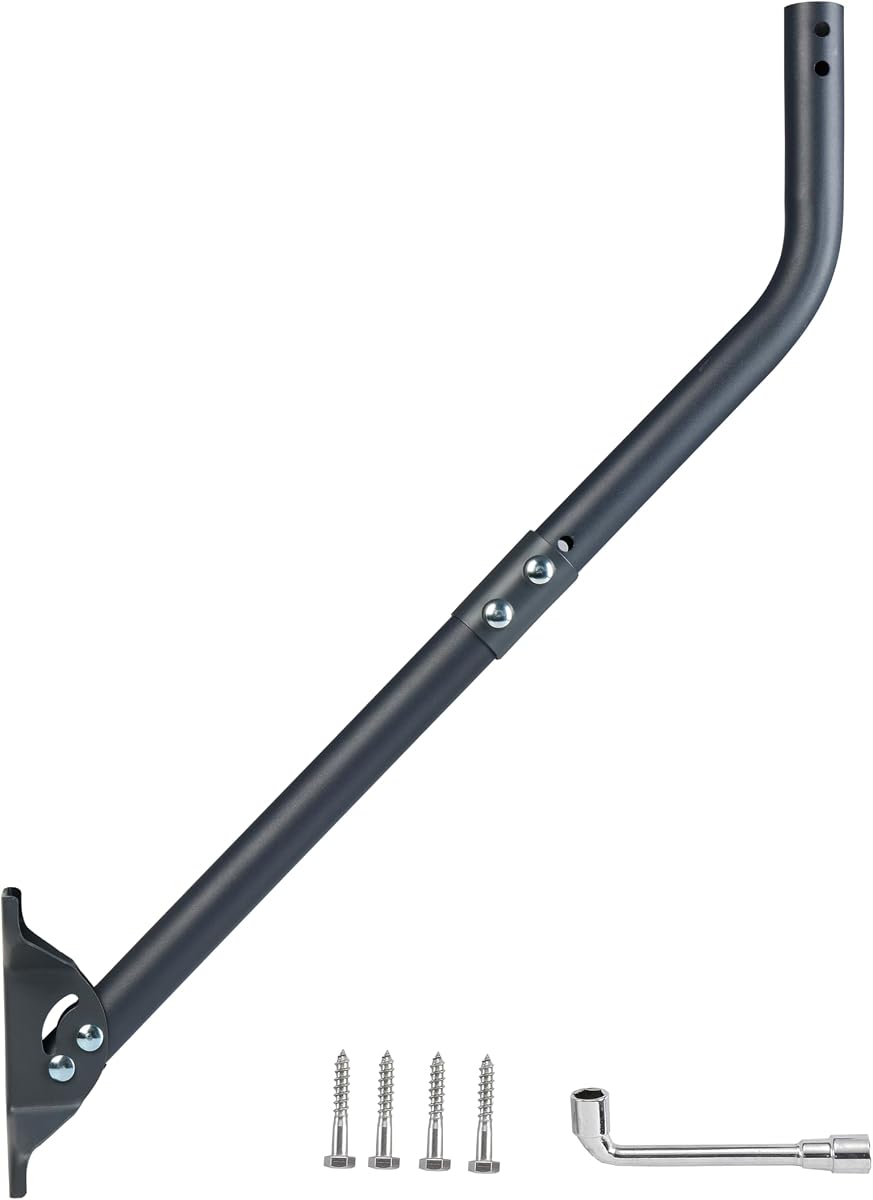
Two complete mounting arms
Adjustable 150-degree tilt
Weather-resistant steel construction
Wall, roof, and pole compatible
A J pole antenna mount raises outdoor equipment above obstructions and creates a more reliable path for signals. The right model should combine a secure bracket, useful reach, durable materials, and an installation method suited to your roof, wall, eave, or existing pole.
This guide compares ten J pole antenna mounts using their stated dimensions, materials, mounting options, adjustment ranges, hardware, device compatibility, and customer ratings. The list covers compact, standard, extended, heavy-duty, multi-pack, and stainless steel designs for a wide range of outdoor applications.
Each review explains who benefits most from a particular mount and where its trade-offs may matter. The top selections represent budget, all-around, and premium options, although the ideal choice depends on antenna weight, required clearance, mounting surface, and local weather. Prices can change at any time.
4.6Editor score
4.7Editor score

4.6Editor score
As an Amazon Associate we earn from qualifying purchases.
The table below compares the ten mounts by arm length, diameter, material, adjustment capability, and practical installation role, making it easier to identify the model that matches your antenna and available mounting space.


This compact heavy-duty J pole earns its place through broad compatibility and a straightforward reversible design. It has a 4.4 customer rating and supports 4G, 5G, WiFi, TV, satellite, weather station, outdoor camera, and cell signal booster equipment. Its 17.25-inch arm is shorter than many competing models, making it most useful when clearance requirements are modest.
We may earn a commission when you buy through this link, at no additional cost to you.
The pole measures 1 11/16 inches in outer diameter and 1.5 inches on the inside, while either end can attach to the bracket. That reversal changes the wall standoff distance and gives installers another way to manage the antenna's position. The arm moves within the bracket until the desired angle is reached and locked, making it easier to aim equipment after the base is secured.
Its most unusual strength is the support for two mounting methods. The bracket can attach to a roof or wall, while the included V-jam brackets and U-bolt clamp kits allow mounting to pipes measuring 1 to 2 inches in diameter. The hardware also includes four ST6 by 50 millimeter stainless steel self-tapping screws, which are intended for suitable surfaces rather than every wall material.
This is a good choice for compact outdoor installations, especially when a larger pole would be inconvenient. The 17.25-inch reach and separately sold Starlink adapter may not suit projects requiring substantial elevation, but the universal device support, reversible geometry, and wall-or-pole flexibility make this model notably versatile.
The same system can be fixed to a roof, wall, or existing 1-to-2-inch pipe. That flexibility makes it easier to adapt when the original mounting surface is not ideal for the antenna's required line of sight.
Using either end of the J pipe changes the distance between the bracket and mounted equipment. This is useful when a compact pole is needed but the antenna still requires more separation from a wall or roof edge.
We may earn a commission when you buy through this link, at no additional cost to you.
This universal J pole combines a 33.25-inch arm with a 1.25-inch diameter and a 4.4 rating. It is a balanced option for weather stations and general antennas that need more height than a short wall mount but do not require the longest pole in the list. Compatibility includes TV, 4G, 5G, WiFi, weather station, satellite equipment, and cell signal boosters.
We may earn a commission when you buy through this link, at no additional cost to you.
Its mast is made from 16-gauge, or approximately 1.5 millimeter, steel, while the mounting bracket is reinforced with 14-gauge, or approximately 2 millimeter, steel. A powder-coated, corrosion-resistant finish is intended to limit the effects of rain, moisture, and long-term outdoor exposure. Structural details make it better suited to permanently mounted equipment than a lightweight temporary bracket.
The reversible pole can be attached from either end, allowing installers to vary standoff distance. It also rotates through up to 180 degrees for placement on vertical, horizontal, or sloped surfaces. A locking pin with two fixing positions helps limit movement after the direction has been established. A compatible 16.5-inch extension is available separately when additional height or clearance is necessary.
This mount is well suited to homeowners who want a versatile middle-ground length without moving to an oversized 51- or 66-inch model. It includes ST8 by 50 millimeter stainless steel screws, plastic anchors, and a screw sleeve wrench. Buyers should still verify that the mounting surface and selected antenna attachment are appropriate before installation.
The 180-degree rotation allows the mast to be oriented for the available wall, eave, or roof geometry. This makes it practical to experiment with the antenna's position before tightening the locking pin.
A reinforced steel bracket and corrosion-resistant coating address common outdoor concerns. The included stainless steel fasteners and anchors also create a more complete installation package than a bare pole alone.
We may earn a commission when you buy through this link, at no additional cost to you.
The CEKAY 1.5x35in is the strongest all-around choice in this comparison, combining a 4.7 rating with a 35-inch reversible arm. It supports 4G, 5G, WiFi, TV and HDTV, satellite, weather stations, and CB radios. Starlink is also possible when paired with the manufacturer's separately sold aluminum alloy adapter for 1-to-2-inch poles.
We may earn a commission when you buy through this link, at no additional cost to you.
Construction uses a 1.5 millimeter, approximately 16-gauge, steel mast and a 2.0 millimeter, approximately 14-gauge, reinforced bracket. Its powder-coated, corrosion-resistant finish is designed for rain, moisture, and prolonged outdoor exposure. The combination of a substantial mast, reinforced bracket, and locking mechanism gives it a stable foundation for permanently installed antennas.
Adjustment is a major strength. The pole rotates up to 180 degrees, both ends are usable, and the bracket provides two fixing positions for horizontal or vertical surfaces. These choices make it easier to find a line of sight around roof edges and eaves. The trade-off is that the 35-inch pole may still need the optional 16.5-inch extension for especially demanding clearance requirements.
The package includes ST8 by 50 millimeter stainless steel screws, plastic anchors, a screw sleeve wrench, and installation instructions. It is a strong recommendation for someone who values adjustment, a compact but capable 35-inch reach, and a higher rating. The best choice still depends on the antenna, attachment hardware, structural surface, and local installation rules.
The 180-degree rotation gives installers room to align the pole, while two locking positions help preserve the selected angle. That combination is valuable when the final antenna position is not apparent until the equipment is installed.
The same mount can serve common broadcast, cellular, WiFi, satellite, and weather-monitoring equipment. Owners should still confirm the device's own mounting bracket and the weight it is designed to support.
We may earn a commission when you buy through this link, at no additional cost to you.
The CEKAY 1.5x51in shares the strong construction and adjustment system of the shorter CEKAY model but offers a 51-inch reversible arm. Its 4.7 rating is the highest listed rating in the group. The additional reach is the decisive feature for antennas that need to clear rooflines, eaves, vegetation, or other nearby obstructions.
We may earn a commission when you buy through this link, at no additional cost to you.
The 1.5 millimeter steel mast and reinforced 2.0 millimeter bracket are powder coated for corrosion resistance. The pole rotates through up to 180 degrees, and the bracket's locking pin has two fixing positions for secure attachment on horizontal or vertical surfaces. As with the 35-inch version, a separate 16.5-inch extension can add even more height and horizontal clearance.
The main drawback is installation geometry. A 51-inch reversible pipe can be unwieldy in tight areas and may place the antenna farther from the intended equipment connection. It also requires careful handling during installation. Buyers need to ensure the attachment point is both accessible and structurally suitable for the added reach of a longer mast.
This mount is a strong option for rooftop installations, elevated weather stations, cellular antennas, and directional WiFi equipment that benefits from a higher line of sight. Included hardware includes stainless steel self-tapping screws, plastic anchors, and a screw sleeve wrench. For smaller setups, the 35-inch CEKAY is more compact; for greater elevation, this model provides useful extra reach.
The 51-inch arm can place equipment farther above a roof edge or away from a wall. Reversing the pipe also changes the relationship between the mounting bracket and the antenna, providing another way to fine-tune the position.
A reinforced bracket, locking pin, and coated steel mast work together to reduce movement. These details are especially relevant for a long arm where leverage can place more stress on the attachment point.
We may earn a commission when you buy through this link, at no additional cost to you.
This two-pack is the budget-minded selection because it includes two complete 19.68-inch J arms rather than one. It carries a 4.6 rating and uses heavy-duty steel with a rust-resistant finish. The package contains two J-arms, two brackets, four hoops, and bolts, making it especially useful for installing matching equipment in separate locations.
We may earn a commission when you buy through this link, at no additional cost to you.
Each arm has a 1.49-inch inner diameter and a 1.65-inch outer diameter. The J mount adjusts through 150 degrees, allowing the installer to tune the direction and standoff of an attached antenna. The stated installation range includes walls, roofs, and other suitable surfaces, and the manufacturer says no special tools are required.
Compatibility is broad: outdoor antennas, wireless bridges, WiFi extenders, Starlink, weather stations, and similar equipment are all listed. Starlink dish support is specifically noted, although the equipment's own required adapters should still be confirmed before purchase. The shorter arm and 150-degree range are less accommodating than the 180-degree rotation offered by several longer models.
This package is a strong value-oriented choice for two projects, a point-to-point link, or an installer who wants a spare mount available. It avoids the need to purchase a second complete kit for another location. Its compact reach makes it less suitable when substantial elevation or a wider range of positioning is the main objective.
Two complete mounting assemblies make the pack practical for paired equipment or for keeping a spare on hand. The included hoops and bolts support the principal attachment steps without requiring a separate collection of basic hardware.
A 150-degree tilt provides enough movement for many common wall and roof installations. It is useful when the antenna needs to clear an edge or face a particular direction without a full 180-degree range.
We may earn a commission when you buy through this link, at no additional cost to you.
The Proxicast J-Max is the premium choice for buyers who prioritize stainless steel construction and precise positioning. It has a 4.6 rating, an 18-inch arm, and a 1.5-inch diameter. Both the bracket and arm are made from 304 stainless steel, while the hardware is also described as 304 stainless steel to resist rust on a home or building.
We may earn a commission when you buy through this link, at no additional cost to you.
Its unique locking pin offers three stated positions: zero, positive 45 degrees, and negative 45 degrees. This gives the installer defined choices instead of relying only on a free-moving pivot. The arm can also slide to improve the antenna's position for signal reception, and the base can attach to a flat or sloping surface.
Reversing the J pipe changes the wall standoff distance, providing flexibility for antennas that must sit farther away from a wall. The mount is listed as compatible with 4G, 5G, WiFi, TV and HDTV, satellite, Helium, weather station, ham radio, and CB equipment. That universal approach makes it appealing for technically experienced owners with varied equipment.
The short 18-inch length is the main limitation. It offers less clearance than the 33-, 35-, 38-, 51-, and 66-inch options, so it works best where the antenna is already near an ideal sightline. For coastal, damp, or exposed locations, however, the all-stainless construction and defined locking positions can justify choosing this premium model.
Using stainless steel for the arm, bracket, and mounting hardware directly addresses long-term corrosion concerns. It is a practical material choice for installations exposed to rain and persistent moisture.
The locking pin supports zero and 45-degree positions in either direction. These repeatable angles can be easier to reproduce during setup than a mount that relies entirely on friction to hold a selected position.
We may earn a commission when you buy through this link, at no additional cost to you.
The PIBIDI 1.25x66in is the long-reach specialist, offering the greatest stated arm length in the group. Its 66-inch reversible pole is designed to raise outdoor TV antennas, weather stations, 4G and 5G antennas, WiFi equipment, satellite antennas, and cell signal boosters above rooflines and beyond eaves or other obstacles. It carries a 4.4 customer rating.
We may earn a commission when you buy through this link, at no additional cost to you.
The mast is 1.5 millimeter steel, paired with a 2 millimeter mounting bracket, and both have a powder-coated, corrosion-resistant finish. The pole rotates up to 180 degrees for walls, eaves, roofs, and other flat or sloped surfaces. A locking-pin bracket provides two fixing positions to help reduce movement after the desired direction is set.
A major distinguishing feature is the included 6.1-inch stabilizing M-bracket. That accessory is intended to reinforce the mast and simplify installation. The package also includes ST8 by 50 millimeter stainless steel self-tapping screws, plastic anchors, and a screw sleeve wrench. A 16.5-inch extension is sold separately if even more reach is required.
This model is best for installations with enough room to handle a very long pole and a need to move equipment above substantial obstructions. It may be unnecessary for a small outdoor TV antenna positioned in a clear location. The key trade-off is reach versus installation complexity: the extra length can solve difficult sightline problems, but it also requires a more spacious mounting approach.
The 66-inch arm can place equipment above a roof edge or farther beyond an eave. This is valuable where a short mount leaves the antenna in a blocked or exposed position.
The included M-bracket adds a support point for a pole that experiences substantial leverage. It is an important consideration because a longer arm transfers more force to its base than a compact mount.
We may earn a commission when you buy through this link, at no additional cost to you.
The ULNA 19.68in J pole is a flexible compact mount with a 4.5 rating. It measures 19.68 inches long, with a 1.49-inch inner diameter and 1.65-inch outer diameter. Its adjustable bracket permits up to 150 degrees of movement, and reversing the mounting brackets allows different stand-off requirements to be accommodated.
We may earn a commission when you buy through this link, at no additional cost to you.
The mount uses heavy-gauge steel with a painted surface for rust resistance. It can be installed on a wall, roof, side, or another suitable structure. Once the base is secured, the included hoops help retain the outdoor equipment. The listed applications include antennas, wireless bridges, WiFi extenders, weather stations, access points, dishes, and cell phone signal boosters.
The package includes two J-bracket assemblies, two pipe brackets, four pipe hoops, and bolts. This gives the installer a substantial set of components for organizing a mount. Dish use is supported, but the manufacturer clearly notes that the pipe adapter and flagpole adapter are not included and must be purchased separately, so those extras should be included in the installation plan.
This J pole is a good option for compact installations where the antenna does not need a tall extension but must be oriented accurately. Its 150-degree adjustment and multiple bracket choices make it versatile. Compared with the 33- to 66-inch models, however, it offers less reach, so installation should begin with a careful check of the required sightline.
The mount is intended for everything from conventional antennas and access points to wireless bridges and dishes. That makes it a practical general-purpose choice for varied outdoor networking and monitoring projects.
The brackets can be reversed to accommodate different distance requirements. This adds flexibility without changing the core 19.68-inch arm length, making the design useful in moderately confined installations.
We may earn a commission when you buy through this link, at no additional cost to you.
The Philips 19in Steel J-Mount is a straightforward outdoor TV antenna solution with a 4.4 rating. Its 19-inch black-coated steel arm can be installed outdoors or in an attic, mounted on a roof or wall. The subdued finish is intended to blend with common outdoor environments while protecting the steel from the elements.
We may earn a commission when you buy through this link, at no additional cost to you.
Installation centers on attaching either end of the J pipe to the included bracket after the bracket has been fixed to a suitable surface. The pipe moves freely within the bracket until the installer locks it at the preferred angle. This adjustment is useful for changing the antenna's position without replacing the entire mount.
The Philips design is less elaborate than some locking-pin models because it does not list a range of fixed pivot positions. It also offers a shorter 19-inch reach than most mid-length and long-reach alternatives. Those limitations do not matter when the TV antenna only needs a modest amount of extra elevation or wall separation.
This model is a sensible pick for a straightforward TV antenna project, particularly for owners who prioritize simple installation and recognizable technical support. It includes a limited-lifetime replacement pledge and free US-based technical support according to the product information. Buyers should confirm that a 19-inch arm provides enough clearance for their specific antenna and roofline.
The sliding J pipe can be positioned within the bracket before it is locked. This gives installers a straightforward way to fine-tune antenna direction after the base has been installed.
Although designed to withstand outdoor exposure, the mount may also be installed in an attic. That option can be useful when the attic offers a stable attachment point and a suitable route for the antenna cable.
We may earn a commission when you buy through this link, at no additional cost to you.
The Skywalker 38in J-Pipe provides a sturdy one-piece alternative for outdoor antennas. It has a 4.5 rating, a 38-inch length, and a 1.66-inch outer diameter. Its stated purpose is to make it easier to place an outdoor antenna on a roof or the side of a house while elevating the attached dish above a shorter standard pole.
We may earn a commission when you buy through this link, at no additional cost to you.
The mount foot installs on either end, allowing the installer to vary the relationship between the base and antenna. Its one-piece metal construction is intended to last longer than a standard pole supplied with many dishes. A powder-coated paint finish is specifically described as rust resistant, making it suitable for continued outdoor exposure.
Compared with the CEKAY, PIBIDI, and other pivot-lock designs, the product information does not list a numerical tilt range or detailed locking positions. It therefore appears better suited to users who prioritize a substantial fixed mast over fine rotational adjustment. The included mast and bracket hardware helps complete the installation, though the exact attachment method depends on the selected surface.
This mount is a good match for an outdoor dish or antenna that benefits from 38 inches of elevation and is attached to a straightforward roof or wall position. It offers more reach than compact 18- and 19-inch models while remaining shorter than the 51- and 66-inch options. Its simple, durable construction is the main appeal.
A single formed mast reduces the number of separate structural sections that must be aligned. This design is appealing for permanent rooftop or side-of-house installations that require dependable support.
The 38-inch length can place a dish higher than a short standard pole, helping it clear nearby roof surfaces. That added height can be valuable for maintaining a practical line of sight.
We may earn a commission when you buy through this link, at no additional cost to you.
The best J pole antenna mount is determined by the equipment being supported, the available mounting surface, required clearance, and the degree of positioning control. Measure before choosing a length, then confirm that the bracket, hardware, and device attachment are compatible.
Arm length controls how far the equipment can be raised above a roof edge or moved away from a wall. Compact mounts measuring 18 to 20 inches suit straightforward TV antenna installations, while 33- to 38-inch poles provide more separation for weather stations, cellular antennas, and dishes. The 51- and 66-inch models are intended for installations that must overcome major roofline or nearby obstructions.
Choose based on a measured line of sight rather than maximum reach alone. An overly long pole can be difficult to handle, may require extra stabilization, and can place the antenna farther from its cable connection. In short, pick the shortest arm that confidently provides the clearance your equipment needs.
Most listed J pole mounts support conventional TV, 4G, 5G, WiFi, satellite, weather station, camera, and cell booster equipment. The device's own mounting bracket must still fit the pole diameter and be designed for its weight. Starlink installations may require a separate dish adapter, while some dish applications also need a pipe or flagpole adapter.
Confirm both dimensions and included accessories before buying. A mount may be universally useful for antennas but lack the specific adapter needed by a satellite dish. In short, check the device instructions, pole diameter, adapter requirements, and load limits before making the final selection.
Powder-coated steel is common among the heavier-duty mounts and is designed to resist corrosion from rain and moisture. The Proxicast option goes further with a 304 stainless steel arm, bracket, and hardware. Material alone does not guarantee long service life, so surface condition, drainage, attachment quality, and environmental exposure still matter.
For damp or exposed locations, a coated steel mount is generally practical, while stainless steel offers a distinct corrosion-focused advantage. In short, prioritize a finish intended for outdoor use and inspect the attachment points periodically for looseness, corrosion, or water collection.
The comparison includes mounts with 150-degree tilts, 180-degree rotations, adjustable sliding arms, and defined locking positions. The Proxicast model uses a locking pin with zero and positive or negative 45-degree settings, while the CEKAY and PIBIDI mounts use a two-position locking-pin bracket. A free-moving bracket, such as the Philips design, can be simpler but may offer less repeatable control.
More adjustment is useful when the best antenna position is uncertain, while defined lock positions can simplify repeatability. In short, consider how much the antenna will move after installation and whether a locking mechanism is likely to be more helpful than simple sliding flexibility.
Roofs, walls, eaves, and existing poles present different installation demands. Some products support wall or pole mounting with separate clamp kits, while others primarily use screws and anchors for a wall, eave, or roof surface. A pipe-mounted arrangement must account for the diameter of the existing pole and the strength of the pipe's existing fixings.
Verify that the supplied fasteners suit the chosen surface; self-tapping screws are not appropriate for every roofing material or wall structure. In short, use the correct anchors for the surface, avoid drilling where structural conflicts exist, and ensure the base is firmly connected before extending the arm.
Pipe diameter affects which antennas, straps, and adapters can be installed. The listed products use outer diameters ranging from 1.25 inches to 1.69 inches, with the reversed pipe providing an inner dimension to work with. Reversibility also changes wall standoff distance, giving compact mounts more placement flexibility than the raw arm length suggests.
Measure both the outside and inside dimensions of the selected pipe section. Compare those figures with the dimensions of the antenna bracket or mounting strap. In short, a reversible design is beneficial only when its two available positions create useful clearances at the actual installation site.
A reinforced bracket, locking pin, stabilizing M-bracket, and multiple hoops can all improve the stability of a completed installation. The PIBIDI model includes a 6.1-inch stabilizing M-bracket, while the two-pack and ULNA products include several hoops, brackets, and bolts. Additional hardware does not replace proper surface preparation, but it can simplify assembly and reduce loose points.
Evaluate the entire mounting system rather than looking only at the arm. In short, match the support structure to the equipment weight and expected movement, tighten every connection, and use the supplied locking or stabilizing components as intended.
The physical space needed to raise a long J pole can exceed the length of the installed product. Workers need room to rotate the arm, attach the antenna, run cables, and tighten the bracket without striking a roof edge or losing access. Cable routing should allow the antenna to be aimed without sharply bending or straining its connection.
Plan the installation before the bracket is fixed. In short, check overhead clearance, access around the mount, the direction of the device cable, and whether the chosen pipe position places the antenna exactly where it needs to be.
Begin by identifying the equipment, its mounting bracket, the available attachment surface, and the required direction of the antenna. Measure the site's roofline, eaves, nearby obstructions, and cable route. Select the appropriate fasteners for the surface rather than assuming the included self-tapping screws are suitable for every wall or roof.
Attach the base securely, position the J pipe in the desired orientation, and tighten the locking mechanism before adding the antenna. Secure the device with the appropriate straps, hoops, or adapter, then make only the adjustments needed for final alignment. Route the cable without creating a tight bend, and confirm that the final position remains stable under normal movement.
Inspect the mount periodically, especially after severe weather. Look for loose fasteners, bracket movement, pipe wear at contact points, corrosion, water accumulation, or damaged cable insulation. Clean accessible debris and keep drainage paths open. Follow the antenna manufacturer's guidance for inspection intervals, wind limits, and grounding requirements, and tighten or replace components only in accordance with those instructions.
A J pole antenna mount supports outdoor antennas and related equipment while raising or separating them from a roof, wall, eave, or existing pole. It is commonly used for TV, weather station, cellular, WiFi, satellite, and camera equipment. The useful length and position depend on the installation site and the line of sight required by the mounted device.
Measure the height of nearby roof edges, eaves, walls, and other obstructions that could block the antenna's line of sight. Then choose the shortest pole that provides enough clearance for the equipment to be mounted and aimed. Very long poles demand more installation space and may need supplemental stabilization, as provided with the PIBIDI model.
Some models support pipe mounting in addition to wall or roof installation. The Heavy Duty 1.69 x 17.25in J-Pole includes clamp kits for pipes measuring 1 to 2 inches in diameter, and other products include pipe brackets or hoops. Confirm the existing pipe's diameter, its mounting security, and the compatibility of every clamp before installation.
It depends on the J pole model and the Starlink equipment being mounted. The CEKAY 35-inch and 51-inch models specify a separately sold aluminum alloy adapter for 1-to-2-inch poles. Some universal mounts state that they support Starlink dishes but still require additional dish or pole adapters, so check the current product instructions before ordering.
A reversible J pipe can be attached from either end, changing the distance between the mounting bracket and the antenna. That alters standoff distance without replacing the entire pole. A non-reversible design has a fixed relationship between the base and the mounted equipment, which may make installation more predictable but offers fewer positioning options.
Stainless steel is especially relevant where rust is a persistent concern because it is inherently resistant to corrosion. The Proxicast J-Max uses 304 stainless steel for its arm, bracket, and mounting hardware. Powder-coated steel options also target outdoor durability, but they should still be inspected for coating damage, trapped moisture, and corrosion over time.
The available product information emphasizes construction, compatibility, and stability but does not provide uniform weight limits for every model. The device manufacturer's instructions should control the acceptable load, including the effects of the extended arm on leverage. Confirm both the antenna's weight specification and the mount's stated limits before installation.
Some models, including the Philips J-Mount, are explicitly suitable for outdoor or attic installation. An attic installation requires a solid attachment point, enough room to raise the pipe, and a safe cable route toward the connected equipment. It also needs to preserve the antenna's required sightline rather than placing it below obstructive materials.
The CEKAY 1.5x35in stands out as the best overall option because it combines a 4.7 rating, 35 inches of reach, 180-degree adjustment, a reinforced bracket, and a locking-pin design. The Universal Antenna Mount Two-Pack is the best budget choice for buyers who need two complete mounts, while the Proxicast J-Max is the premium pick for 304 stainless steel construction and defined locking positions.
Prioritize the installation itself rather than choosing solely by length. A suitable pole should provide enough clearance, fit the antenna bracket, use the correct hardware for the mounting surface, and hold its position without movement. Long-reach models are valuable for difficult sightlines, but compact mounts are often easier to handle and better suited to straightforward rooftop TV antenna projects.
Check the current price and included accessories before purchasing because prices and package contents can change. Also verify dimensions, device compatibility, adapter requirements, and installation instructions for the exact model. Those checks will help ensure that the chosen J pole antenna mount provides the reach, stability, and flexibility the equipment actually needs.